
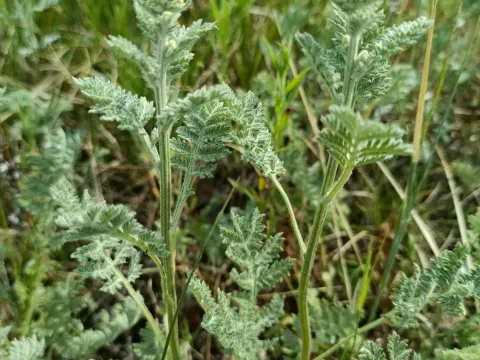
Tansy-leaved wormwood
Artemisia tanacetifolia
Tansy-leaved wormwood (Artemisia tanacetifolia) is a perennial herbaceous plant belonging to the Asteraceae family. Native to Siberia and parts of East Asia, it has evolved to thrive in steppe and forest-steppe environments.
What the section contains
Tansy-leaved wormwood
The plant is known for its high winter hardiness, making it an excellent candidate for agricultural cultivation in regions with harsh winters. It is highly photophilous and requires full sun exposure to maximize the synthesis of essential oils in its foliage.
Regarding soil requirements, it prefers well-drained, sandy, or loamy soils. It is remarkably tolerant of poor nutrient conditions but shows improved biomass production when grown in moderately fertile, neutral-pH substrates.
Botanically, it features pinnately-divided leaves that resemble those of common tansy, providing the inspiration for its specific name. The plant grows in clumps with erect, woody stems that support its structural integrity during windy periods.
Economically, this species is cultivated primarily for the medicinal industry. It is a rich source of volatile oils and phenolic compounds, which are extracted for their antiseptic, anti-inflammatory, and antioxidant properties.
Fungal diseases, particularly powdery mildew, pose the most significant threat to Tansy-leaved wormwood, especially in regions with high humidity or stagnant air.
In terms of insect pests, aphids and various species of weevils can cause significant damage to the leaf tissue, affecting both the yield and the quality of the harvested material.
To mitigate these risks, farmers should prioritize adequate plant spacing to ensure proper air circulation and reduce the risk of fungal spore spread.
Integrated pest management strategies are encouraged, focusing on biological controls rather than synthetic pesticides to maintain the purity of the medicinal product.
Crop rotation is essential; growing this plant on the same plot for multiple consecutive years can lead to the buildup of soil-borne pathogens in the root zone.