
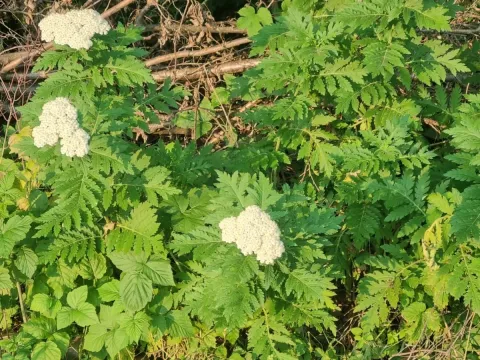
Tanacetum macrophyllum
Tanacetum macrophyllum
Sowing of Tanacetum macrophyllum seeds in open ground is primarily carried out in spring, once the soil has warmed up sufficiently, or in late summer to ensure rooting before frosts.
What the section contains
Tanacetum macrophyllum
For seedling production, sowing begins in March or April in greenhouses or cold frames. Seeds are covered shallowly, as they require access to light for successful germination.
The optimal temperature for seedling emergence is approximately 18–20 degrees Celsius. Pricking out is performed when the first pair of true leaves appears, transferring plants to individual containers.
Transplanting hardened seedlings to their permanent location is carried out in May, once the risk of night frost has passed, allowing the culture to adapt quickly to new conditions.
The planting pattern must account for intensive root system development and bush width; it is recommended to maintain a distance of at least 40–50 centimeters between plants.
Tanacetum macrophyllum belongs to the Asteraceae family and is an undemanding perennial plant that prefers open, sunny areas, although light shade is also acceptable.
The crop requires fertile, well-drained soils with a neutral or slightly alkaline pH. Waterlogging in the root zone is detrimental, so heavy clay soils require prior structural improvement.
The plant possesses high winter hardiness and is capable of surviving harsh climatic conditions in temperate zones without requiring complex protection during winter in most regions.
In dry periods, Tanacetum requires moderate watering, although it generally demonstrates drought resistance once the root system has fully established itself in the soil.
Agronomy includes regular inter-row cultivation and weeding, which helps maintain an optimal water-air regime for the development of robust, leafy shoots.
The economic value of Tanacetum macrophyllum lies in its decorative use, as well as the production of plant biomass for phytotherapy and organic horticulture purposes.
During the flowering period, which occurs in June–July, the plant forms large corymbose inflorescences consisting of numerous small white flowers, providing high aesthetic value.
Under industrial cultivation, biomass yield depends directly on planting density and soil fertility, ensuring a stable harvest for 4–6 years without the need for reseeding.
The plant actively attracts beneficial insect-entomophages, making it a valuable component of agroecosystems for controlling pests in vegetable crops on adjacent plots.
Harvesting of inflorescences is performed during the peak flowering phase, when the concentration of bioactive compounds reaches its maximum for drying and further processing.
The crop has a strong immune system, but in conditions of high humidity or overly dense planting, it can be affected by fungal diseases such as powdery mildew or gray mold.
Among pests, various species of aphids are most frequently encountered on Tanacetum, damaging young inflorescences and leaves by sucking sap and weakening the plant's immunity.
Root damage by mole crickets or wireworms is possible when establishing the crop on land recently converted from sod, requiring preventive protective measures.
Disease prevention consists of strictly following irrigation regimes, thinning plantings in a timely manner, and maintaining high soil fertility levels to support the crop's natural defenses.
- Compliance with crop rotation.
- Regular plant inspection.
- Removal of plant debris in autumn.
- Application of biological agents at the first sign of pests.