
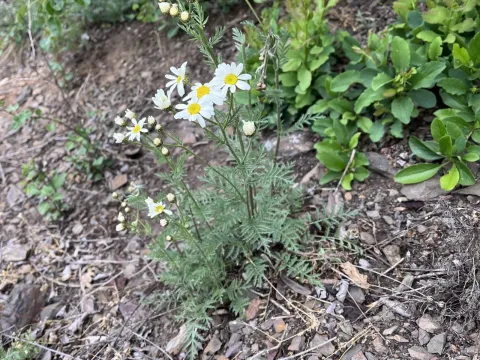
Tanacetum corymbosum
Tanacetum corymbosum
Tanacetum corymbosum, also known as Scentless Feverfew, is a hardy perennial belonging to the Asteraceae family, native to the forest-steppe zones of Europe and Western Asia.
What the section contains
Tanacetum corymbosum
Propagation can be achieved via direct seeding or by dividing established clumps in early spring or late autumn, which ensures faster development of the root system.
When seeding, the material should be placed at a depth of about 0.5 cm in well-prepared soil, as the seeds require sufficient light for uniform germination.
The optimal planting density should allow for proper airflow between individual plants, typically requiring spacing of 30 to 45 centimeters depending on the soil fertility.
Establishment of a new plantation is best performed in early spring, allowing the plants to develop robust root systems before the onset of the summer heat.
This species thrives in sunny locations but can tolerate partial shade, demonstrating high adaptability to various light conditions throughout the growing season.
It prefers well-drained, fertile, and moderately moist soils but exhibits excellent tolerance to drought, making it an ideal candidate for low-maintenance landscaping and sustainable farming.
The plant performs well in neutral to slightly alkaline soil conditions and does not require frequent heavy fertilization to remain productive and healthy.
Hardiness is one of the key characteristics of Tanacetum corymbosum, as it can withstand cold winters without needing significant protection, typical of its native range.
Routine field maintenance, including inter-row cultivation and manual weeding, is essential in the early stages to prevent weed competition and encourage vigorous growth.
Common issues include fungal diseases such as powdery mildew, which can become prevalent if planting density is too high or if air circulation is obstructed.
Pests like aphids and various species of mites can occasionally cause damage to the foliage, necessitating vigilant monitoring during the active growth periods.
Integrated pest management strategies are recommended, focusing on maintaining biodiversity around the fields to support natural predators of these pests.
Crop rotation is a vital practice to break disease cycles, as long-term monoculture can lead to the accumulation of soil-borne pathogens in the root zone.
Application of fungicides should be used only as a last resort, prioritizing organic and biological control measures to preserve the ecological integrity of the harvest.
Harvesting is concentrated on the flowering heads, which should be collected at the peak of bloom to ensure the highest concentration of active biochemical compounds.
The tops of the plants, including the flowering corymbs, are cut manually during the middle of the day after the morning dew has completely evaporated.
Drying is a critical step that must be performed in shaded, well-ventilated areas to retain the color and potency of the botanical material for industrial or medicinal use.
Once dried, the raw material should be sorted to remove any unwanted stalks or debris, ensuring that only the highest quality flower heads are kept for processing.
Proper storage in moisture-proof containers is essential to prevent degradation, allowing the product to maintain its shelf life for up to twenty-four months.