
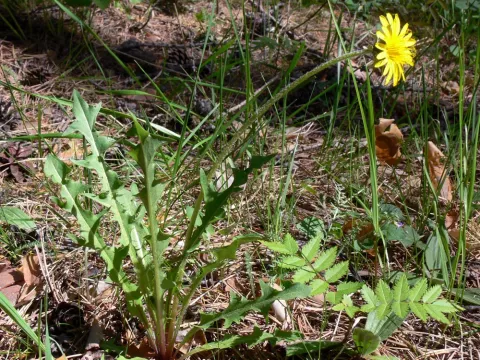
Taraxacum marklundii
Taraxacum marklundii
Taraxacum marklundii is an apomictic species within the Asteraceae family. As an agricultural crop, it is cultivated primarily for its medicinal properties and as a specialized fodder plant, requiring careful management during the establishment phase.
What the section contains
Taraxacum marklundii
Sowing should take place in early spring, once the soil has warmed sufficiently to allow for consistent germination. Seeds are relatively small and require precise placement, ideally at a depth of no more than one centimeter.
Autumn planting is also a viable option, performed just before the onset of winter frost. This technique allows seeds to undergo natural stratification, ensuring faster and more uniform germination when spring temperatures rise.
Standard row planting with a spacing of 30 to 45 centimeters is recommended to facilitate mechanical weeding and ensure optimal light penetration for the rosettes. This spacing minimizes plant competition during the first year of growth.
Regular monitoring of seedlings is essential during the initial weeks. Once the first true leaves emerge, thinning may be necessary if the seeding density is too high, preventing overcrowding.
This crop thrives in well-drained, fertile loam soils. It is sensitive to waterlogging, so selection of a site with adequate drainage is critical for preventing root rot and ensuring long-term plant health.
As a light-demanding species, Taraxacum marklundii requires full sun to achieve optimal growth and leaf biomass. Any shading from nearby crops or infrastructure will significantly decrease yield and crop quality.
The soil should be maintained at a near-neutral pH level. If the soil is overly acidic, corrective measures such as liming should be applied well in advance of the planting season to improve nutrient uptake.
The crop is highly resilient to temperate climate conditions, including minor frost events. It is well-adapted to varied weather patterns, though it requires consistent moisture during the peak vegetative phase.
Good agronomic practice involves consistent inter-row cultivation to suppress weeds. Weeds can easily outcompete this crop in the early stages, so maintaining a clean field is essential for production success.
Aphids are the most common pests, targeting the tender leaves of the plant. Biological control agents or mild soap sprays can be used to manage infestations without compromising the purity of the crop.
Root damage caused by soil-dwelling pests like wireworms can weaken the plant and lead to stunted growth. Crop rotation is the most effective way to break the pest cycle and improve field sanitation.
Powdery mildew is a common fungal threat, typically appearing during humid periods. Ensuring proper air circulation and avoiding overly dense plant populations are key preventative strategies.
Root rot, driven by stagnant moisture, can be a major issue for Taraxacum marklundii. Implementing proper drainage and avoiding excessive irrigation is vital to prevent fungal spread within the root system.
- Regular inspection of leaf surfaces.
- Sanitary removal of infected plants.
- Implementation of crop rotation cycles.
Harvesting the leaves is typically conducted before the plant reaches the peak flowering stage. This timing ensures that the leaves contain the highest concentration of desired phytochemical compounds.
The harvest of the root system occurs in the autumn. As the aerial parts begin to wither, the plant channels energy and nutrients into the root, making this the best time to collect high-quality raw material.
Mechanical harvesting involves lifting the soil to expose the roots, which are then cleaned to remove soil debris. Gentle washing with running water is necessary to prepare the roots for further processing.
Drying must be performed in shaded, well-ventilated areas to prevent degradation of active compounds. Keeping temperatures below 45 degrees Celsius is crucial to maintaining product quality.
Once dried, the crop should be packaged in permeable materials such as paper or jute sacks. Proper storage in a dry and dark environment will preserve the harvested material for extended periods.