
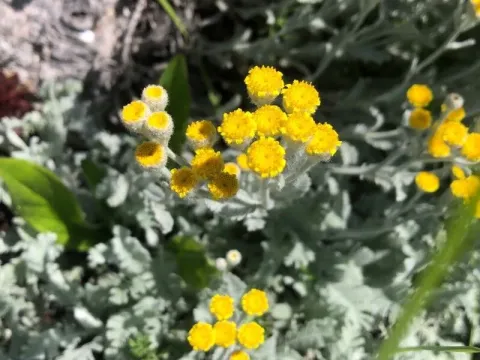
Tanacetum haradjanii
Tanacetum haradjanii
Tanacetum haradjanii is a stunning perennial subshrub belonging to the Asteraceae family. It is widely recognized by horticulturists for its finely dissected, silvery-white foliage that adds a unique texture to any garden design.
What the section contains
Tanacetum haradjanii
Botanically, this species is well-adapted to high-altitude rocky environments. Its leaves are covered in dense, soft hairs, which serve as a natural defense mechanism against intense sunlight and dehydration, contributing to its extreme drought tolerance.
When it comes to soil requirements, the plant demands excellent drainage. It thrives in gritty, sandy, or rocky soils that do not hold excessive moisture. Heavy or clay-based soils are detrimental and should be avoided or heavily amended.
The cultural conditions for success involve providing a full sun exposure. In locations with insufficient light, the plant tends to lose its characteristic silver glow and may become leggy or lose its compact, mounded shape.
Regarding general maintenance, Tanacetum haradjanii is a low-input crop. It requires very little fertilization, as excessive nutrients often lead to lush but weak growth that is more susceptible to environmental stress and pests.
Root rot is the primary threat to this species, almost always caused by poor soil drainage or overly frequent watering. Ensuring a dry environment around the root crown is essential for long-term survival.
Powdery mildew is a common fungal challenge, particularly in climates with high humidity or stagnant air. Proper spacing between plants and a sunny location help prevent the development of this unsightly white fungal growth.
Aphids can occasionally infest the plant, clustering on tender new shoots. While not usually fatal, they can cause leaf curling and should be managed with insecticidal soap or targeted horticultural oils if populations grow.
Leaf miners may tunnel through the foliage, creating erratic tracks that mar the plant's ornamental appeal. Hand-picking the affected leaves is often sufficient for minor infestations, while severe cases require systemic treatment.
Environmental stress, often manifesting as a result of shade or improper watering habits, weakens the plant's overall health and increases its susceptibility to opportunistic pathogens and pest attacks.