
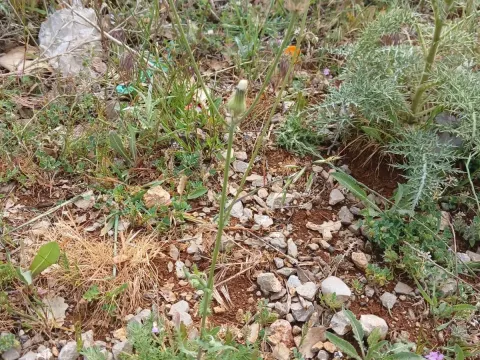
Syrian hawksbeard
Crepis syriaca
Syrian hawksbeard (Crepis syriaca) is an annual herbaceous plant belonging to the Asteraceae family. In agricultural environments, it is primarily recognized as a weed that can compete with crops for sunlight, water, and essential nutrients.
What the section contains
Syrian hawksbeard
The plant features a deep taproot system, which contributes to its resilience in various soil profiles. Its stems are erect and branched, typically reaching heights of 30 to 80 centimeters during the active growing season.
The leaves are generally lanceolate or runcinate with serrated edges, providing the plant with an efficient photosynthetic surface. Like many members of its family, the plant produces yellow inflorescences in heads that are adapted for cross-pollination.
Originating from Western Asia and the Middle East, the species thrives in warm, temperate climates. It demonstrates a high degree of adaptability to different light intensities, making it a persistent presence in open fields and neglected agricultural areas.
Optimal growth is achieved in well-drained soils. Due to its robust nature, managing Syrian hawksbeard requires a combination of cultural practices, including consistent crop rotation and competitive sowing techniques that suppress weed establishment.
The plant is susceptible to various fungal pathogens, such as powdery mildew, which can spread in conditions of high humidity. While these diseases affect the health of the individual plant, they are rarely sufficient to eliminate the weed population entirely.
Aphids are the most common pests, clustering on the tender parts of the stems and leaves. Their feeding activities weaken the plant and can serve as vectors for secondary viral infections that may persist in the field environment.
Root-feeding larvae and nematodes can also pose a threat to the plant's structural integrity. Integrated pest management strategies often focus on identifying early signs of infestation to prevent these pests from spreading to primary crop species.
Preventing seed dispersal is critical for the long-term control of this species. Mowing or cultivation prior to seed set is the most effective way to reduce the seed bank in the soil and limit future germination cycles.
Chemical control involving selective herbicides is effective when applied during the seedling or rosette stage. Proper timing of these interventions is essential to ensure maximum efficacy while minimizing the impact on non-target crops.