
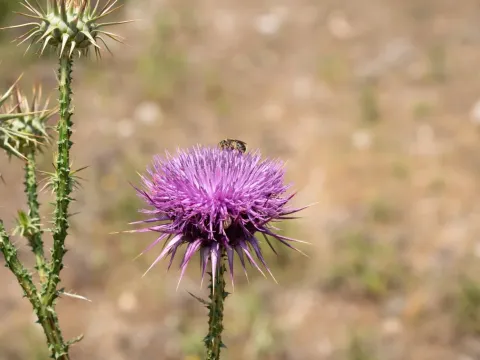
Sibthorp's Cotton Thistle
Onopordum sibthorpianum
Sibthorp's Cotton Thistle (Onopordum sibthorpianum) is a biennial plant species belonging to the Asteraceae family. It is a robust plant characterized by its impressive height and spiny, winged stems that provide both structural integrity and a defense mechanism against herbivores.
What the section contains
Sibthorp's Cotton Thistle
Originating from the Mediterranean region and parts of the Near East, this species is naturally adapted to survive in harsh, arid environments. Its biological cycle is optimized for areas with distinct wet and dry seasons, where it uses deep taproots to access subsoil moisture during long periods of drought.
The plant requires full sun exposure and well-draining, sandy or loamy soils to prevent root decay. It is highly tolerant of poor soil conditions and is often observed in disturbed landscapes, indicating its potential for restoration projects on degraded land.
Climatic requirements involve long, warm summers, which are necessary for the maturation of its large, nectar-rich flower heads. The plant is resistant to high winds, which is an evolutionary advantage in open, steppe-like habitats where it naturally thrives.
Agronomically, this crop is valued for its nectar production, supporting healthy pollinator populations. Furthermore, research into its seeds suggests the presence of vegetable oils, providing a secondary utility for industrial purposes or animal feed additives when processed appropriately.
Sibthorp's Cotton Thistle is primarily threatened by fungal pathogens, specifically rust fungi (Puccinia spp.) which can severely defoliate the plant under high humidity conditions. Root rot can also occur if the soil structure remains waterlogged for extended periods.
Regarding pest management, aphid infestations and stem-boring weevils are the most frequent challenges. These insects compromise the vascular integrity of the plant, often leading to stunted growth and reduced seed yield, which is critical for those managing the plant for agricultural harvest.