
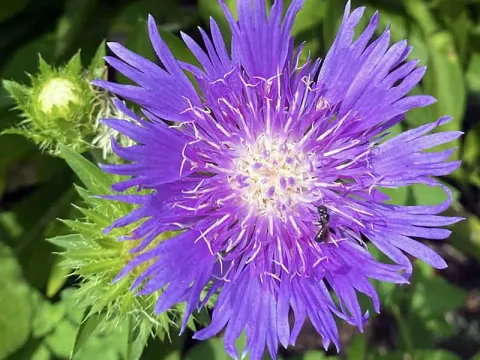
Stokesia
Stokesia L’Hér.
Stokesia is typically propagated via seeds sown in spring once the soil has sufficiently warmed up. For better germination rates, a cold stratification period of 3 to 4 weeks is highly recommended before sowing.
What the section contains

Stokesia
For earlier flowering, starting seeds indoors in late winter is a common practice. Seeds should be sown in trays filled with a light, well-draining seed-starting mix and placed under bright, diffused light.
When sowing directly into the garden, place seeds at a shallow depth of about 1 cm. Keep the soil surface consistently moist but not waterlogged until germination occurs, which usually takes several weeks.
Seedlings should be thinned or spaced out by 30–40 cm to ensure adequate airflow and prevent overcrowding. First-year growth is generally slow, so vigilance against weed competition is essential.
For established plants, division is the most effective method of propagation. Dividing clumps every 3 to 4 years prevents the center of the plant from dying out and maintains vigorous, healthy growth.
Stokesia, commonly known as Stokes' aster, belongs to the Asteraceae family and is a native perennial to the southeastern United States. It is a monotypic genus, characterized by its unique, thistle-like flowers.
This crop thrives in full sun exposure, although it can tolerate light afternoon shade in hotter climates. Adequate sunlight is crucial for maintaining the intensity of the blue or violet petal color.
Well-draining, moderately fertile soil is required for optimal performance. The plant is particularly sensitive to winter moisture; therefore, soil drainage must be excellent to prevent root rot.
While Stokesia is reasonably drought-tolerant once established, consistent watering during dry spells promotes a more impressive flowering season. It prefers neutral to slightly acidic soil conditions.
Regular maintenance involves deadheading spent blooms to encourage secondary flowering waves. In colder hardiness zones, a light winter mulch is advised to protect the crown from severe frost damage.
Root rot is the most common threat to Stokesia, almost always caused by poor soil drainage or excessive irrigation. Ensuring a well-drained planting site is the primary preventive measure.
Powdery mildew can occur during periods of high humidity and poor air circulation. Using fungicidal sprays and spacing plants correctly helps mitigate this fungal issue.
Pests such as aphids and spider mites can occasionally affect the foliage. Routine monitoring is necessary, and infestations should be addressed with appropriate insecticides or neem oil applications.
Slugs and snails may feed on tender young leaves, particularly in the spring. Implementing manual barriers or bait stations around the perimeter of the planting area is an effective control strategy.
Fall cleanup, including the removal of dead foliage, is vital for sanitation. This simple task significantly reduces the habitat for overwintering pests and prevents the spread of fungal spores.