
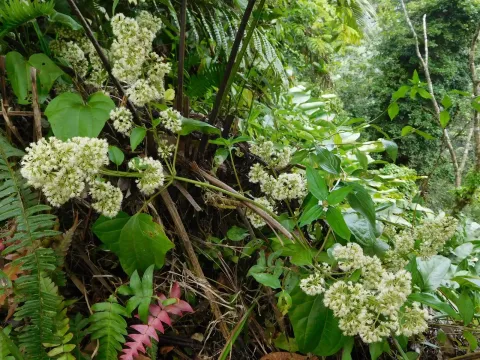
Mikania vitifolia
Mikania vitifolia
Mikania vitifolia is a vigorous, climbing perennial vine that belongs to the Asteraceae family. Known for its rapid growth rate, it naturally thrives in dense tropical forest environments where it climbs over other vegetation to reach sunlight.
What the section contains
Mikania vitifolia
The plant is native to South and Central America, specifically adapting to regions with high precipitation and consistent temperatures. It requires a well-draining, nutrient-rich soil composition that retains moisture without becoming waterlogged to support its extensive root system.
Regarding climatic needs, this species is strictly tropical. It demands high ambient humidity levels and a warm environment throughout the growing season. Exposure to temperatures below freezing will cause immediate damage to the aerial parts and can lead to plant death.
The botanical structure is characterized by large, palmately lobed leaves that resemble those of grapevines, giving the plant its common specific name. The vine utilizes specialized tendrils or twining stems to ascend and occupy the vertical space within its habitat.
In terms of agricultural and practical use, Mikania vitifolia is primarily studied for its phytochemical profile. Various species within the genus Mikania are valued in traditional medicine for their bioactive compounds, which warrant further scientific investigation.
Disease management is a critical aspect of Mikania vitifolia cultivation. The most prevalent issues include various fungal pathogens, such as powdery mildew and rust, which thrive in the humid, stagnant air conditions often found in crowded garden settings.
Insects pose significant pressure on the plant's health. Spider mites and aphids are among the most problematic pests, feeding on the undersides of leaves and young stems. Their infestation leads to leaf curling, stunting of growth, and reduced overall plant vigor.
Root-knot nematodes can also be a hidden threat, especially in soils that are not properly sanitized. These microscopic pests attack the root system, causing galls that inhibit the plant's ability to absorb water and essential nutrients effectively.
Preventative cultural practices are essential, including ensuring adequate spacing between individual plants to promote airflow. This simple measure significantly reduces the risk of fungal outbreaks and discourages the rapid multiplication of localized pest populations.
Monitoring the soil moisture levels is vital. Over-saturation creates an ideal environment for soil-borne pathogens. By maintaining a balance between proper hydration and drainage, growers can maintain a healthy plant and avoid the need for intensive chemical applications.