
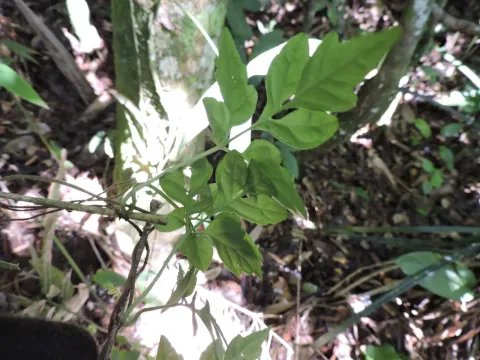
Mikania ternata
Mikania ternata
Mikania ternata is a perennial herbaceous climber belonging to the Asteraceae family. Originating from the tropical regions of South America, this plant is well-known for its distinctive trifoliate leaves and vigorous climbing habit, making it an excellent candidate for vertical displays.
What the section contains
Mikania ternata
The plant thrives in warm, tropical climates and requires consistent warmth to maintain active growth. It is highly sensitive to cold weather and frost, which limits its outdoor cultivation to frost-free regions or necessitates indoor/greenhouse management in cooler areas.
For optimal health, Mikania ternata requires a well-draining, nutrient-rich potting mix that retains moisture without becoming waterlogged. A substrate composed of peat, perlite, and organic compost is usually recommended to ensure healthy root development.
Cultivation requires the provision of trellises, stakes, or other support structures to accommodate the vine's natural climbing nature. Regular pruning is essential to manage the plant's size, promote bushy growth, and remove any dead or damaged stems during the growing season.
Environmental conditions play a critical role in success, with a preference for bright, indirect light. Prolonged exposure to intense direct sunlight can scorch the foliage, while insufficient light can lead to spindly stems and reduced overall vigor of the plant.
Spider mites are the most prevalent pest, particularly in controlled environments with low humidity. Maintaining higher humidity levels and using appropriate miticides are effective strategies for managing these populations and protecting the foliage.
Mealybugs can often be found in the leaf axils, where they feed on plant sap and cause stunted growth. Regular manual inspection and the use of systemic insecticides are standard procedures for controlling these persistent pests in greenhouse collections.
Root rot is a significant risk associated with overwatering and poorly draining soil. To prevent this, it is crucial to ensure that pots have adequate drainage holes and that the soil is allowed to dry slightly between watering sessions.
Leaf spot diseases may occur in stagnant, humid environments where air circulation is inadequate. Improving airflow through ventilation and maintaining dry foliage surfaces are key preventative measures against various fungal pathogens.
Aphids can infest new growth tips, causing deformation and general decline in the plant's aesthetic value. Early detection and application of insecticidal soaps are highly effective in managing minor infestations before they become widespread across the plant.