
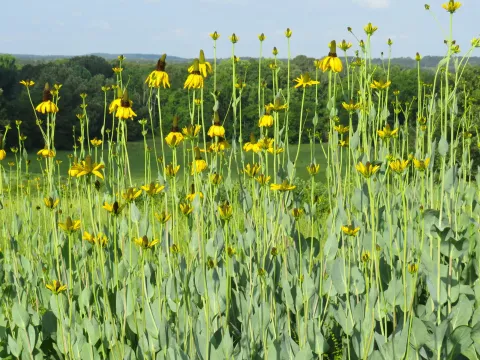
Giant coneflower
Rudbeckia maxima
Giant coneflower (Rudbeckia maxima) is propagated via seeds or division of mature clumps. Direct sowing in prepared beds is best performed in spring after the danger of severe frost has completely passed.
What the section contains
Giant coneflower
For earlier blooms, starting seeds indoors in late winter is highly effective. The seeds require consistent moisture to germinate, and seedlings should be hardened off before moving to permanent outdoor locations.
When sowing, provide adequate spacing of at least 60 to 90 centimeters, as this species develops a massive root system and tall, sturdy flower stalks that require significant room to thrive.
Soil preparation should include organic matter incorporation to ensure good nutrient availability. A well-draining yet moisture-retentive seedbed is crucial for optimal development of young plants.
Stratification of seeds for several weeks at low temperatures can significantly improve germination rates, mimicking the natural cycle of the species in its native North American habitats.
Belonging to the Asteraceae family, Rudbeckia maxima is native to the southern United States. It naturally grows in moist prairies, which dictates its preference for consistently moist soil conditions.
This species thrives in full sun but can tolerate partial shade. While it is quite adaptable to different soil types, deep, nutrient-rich loams provide the best results for vegetative growth.
Although it is moderately drought-tolerant once established, supplemental watering during prolonged dry spells is necessary to maintain the plant's decorative appearance and stalk height.
Nutritional requirements are moderate; a balanced slow-release fertilizer applied in early spring supports the vigorous growth of the impressive, waxy foliage and tall stalks.
The plant is hardy in most temperate zones. Its architectural height makes it a perfect choice for the back of borders, providing structure and contrast to finer-textured plants.
Rudbeckia maxima is generally robust and rarely suffers from severe diseases. However, in crowded plantings with poor airflow, powdery mildew can occasionally manifest on the foliage.
Pests such as aphids may occasionally congregate on the developing flower buds, requiring standard horticultural interventions if infestations become significant during the growing season.
Root rot is the primary risk factor, almost exclusively associated with heavy, waterlogged soils. Ensuring good drainage is the most effective cultural method to prevent this issue.
Regular monitoring during the peak of the season allows for the early detection of any physiological stress or pest damage, preventing long-term decline of the plant health.
Cleaning up plant debris at the end of the season is recommended to maintain field hygiene and prevent the overwintering of potential pathogens or pest larvae.