
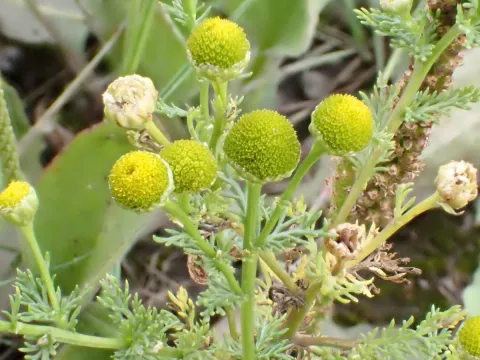
German chamomile
Matricaria
German chamomile (Matricaria chamomilla) is an annual herb of the Asteraceae family widely cultivated for its essential oils. The seeds are exceptionally small, requiring a shallow sowing depth of less than 1 cm to ensure proper germination and seedling emergence.
What the section contains

German chamomile
The preferred sowing time is late autumn, which allows for natural stratification during the winter. This practice leads to stronger seedlings and earlier flowering in the following spring compared to spring-sown crops.
Spring sowing should be performed as early as possible once the soil reaches a workable condition. Maintaining consistent moisture in the topsoil is critical during the first two weeks, as the seeds are sensitive to desiccation.
Row spacing is typically set between 45 and 60 cm to allow for mechanical cultivation. Keeping the crop rows free of weeds during the early vegetative stage is essential for establishing a healthy and competitive stand.
Modern production often uses precision seeders to optimize plant density. Proper spacing ensures that each plant receives adequate light, which is directly correlated to the production of high-quality medicinal flower heads.
Chamomile thrives in light, well-draining soils such as sandy loams or silt loams. It is highly intolerant to waterlogged conditions, which can lead to rapid root rot and significant yield losses.
As a sun-loving plant, chamomile requires full exposure to sunlight throughout the day. Sufficient solar radiation is necessary to maximize the concentration of active compounds, including chamazulene, in the flower heads.
The crop prefers a temperate climate and is moderately frost-hardy. While it can withstand light frosts as a seedling, it performs best in mild conditions with moderate temperatures during the flowering phase.
Soil pH should ideally be neutral or slightly acidic. Nutrient management focuses on adequate phosphorus and potassium levels, as excessive nitrogen may encourage vegetative growth at the expense of floral development.
Crop rotation is mandatory to prevent the build-up of soil-borne pathogens. Ideal predecessors include cereal crops or fallow land, which help reduce weed pressure and provide a clean seedbed for the chamomile.
Powdery mildew is a prevalent fungal disease that affects chamomile, especially in humid or poorly ventilated fields. It appears as a white, dusty layer on leaves and stems, significantly weakening the plants.
Root rot, often caused by Pythium or Fusarium species, is a common problem in fields with poor drainage. Once established, it can destroy entire sections of a crop, making prevention through soil management the best strategy.
Aphids and various bug species represent the main insect threats. They damage the floral buds, which reduces the marketability and medicinal value of the final harvest by causing deformity and tissue necrosis.
Wireworms and other soil-dwelling larvae can stunt plant growth by feeding on the root system. Effective weed control and deep plowing help in managing the populations of these subterranean pests.
Integrated Pest Management (IPM) is recommended, focusing on the use of clean planting materials and maintaining field hygiene to minimize the need for chemical interventions near harvest time.
Harvesting is the most critical phase in chamomile production. It must occur when the ray florets are horizontal, indicating that the essential oil content is at its peak and the flowers are mature.
Manual harvesting with combs or specialized mechanical harvesters is utilized depending on the scale of the farm. Operations should be timed to avoid early morning dew to prevent moisture-related quality degradation.
Prompt post-harvest handling is essential. Collected flower heads must be transported to the drying facility immediately, as they are prone to rapid self-heating and fermentation if stored in deep layers.
Drying is performed in controlled environments at temperatures not exceeding 45 degrees Celsius. Excessive heat causes the evaporation of volatile oils, which are the primary components determining the commercial grade.
After the drying process, the product is cleaned and graded to remove impurities like stems and leaves. Proper packaging in breathable containers ensures the stability of the medicinal properties during storage.