
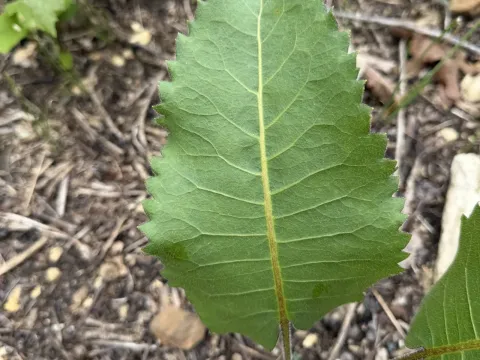
Prairie dock
Silphium terebinthinaceum
Silphium terebinthinaceum, commonly known as prairie dock, is a long-lived perennial plant belonging to the Asteraceae family. Sowing is best performed in late autumn to allow for natural stratification or in early spring once soil conditions permit.
What the section contains
Prairie dock
Seeds should be planted at a depth of 2 to 3 centimeters in well-prepared, weed-free soil. Germination can be slow and sporadic, making soil moisture management critical during the establishment phase.
In the first year of growth, the plant focuses on developing its deep taproot, so seedlings remain relatively small. Adequate weed control is essential during this stage to ensure the young plants are not outcompeted.
Row spacing of 60 to 70 centimeters is typically recommended for agricultural production. This allows for mechanical cultivation between rows to maintain a clean field and encourages robust root development.
Proper soil compaction over the seeds immediately after sowing is recommended to facilitate the capillary rise of moisture, which is necessary for successful germination.
Prairie dock thrives in deep, fertile, loamy soils that possess high moisture retention capabilities. It is notably drought-tolerant once established, thanks to its extensive root system that accesses subsoil water.
The plant requires full sun exposure to reach its maximum productivity. Shady conditions will significantly decrease biomass yield and overall plant vigor throughout the growing season.
It prefers a soil pH range of 6.0 to 7.5. While it adapts to various soil types, it performs poorly in consistently waterlogged or heavy clay environments prone to soil heaving during winter.
The species is highly winter-hardy and survives extreme cold, making it a reliable perennial option for forage systems in temperate climates where annual replanting is undesirable.
Fertilization with nitrogen-based products can enhance biomass output, but as a long-term perennial, it also benefits from organic matter enrichment, which improves long-term soil structure.
Silphium terebinthinaceum is highly valued for its ability to produce significant amounts of green biomass throughout the growing season, providing a stable source of high-quality forage.
Under intensive management, it can support two to three cuttings per year. Its ability to regrow vigorously after each harvest ensures sustained yields over many years of field use.
Peak yield potential is typically achieved by the third year as the root system matures. Once established, the stand can remain productive for over a decade, reducing costs associated with tillage.
The biomass is characterized by good protein content and fiber balance, making it a suitable choice for cattle feeding programs when harvested at the appropriate developmental stage.
Yield stability is a hallmark of this crop, as it resists fluctuations caused by seasonal drought, which often limit the performance of shallower-rooted forage grass varieties.
The plant generally exhibits high natural resistance to many common agricultural diseases. However, in overly humid or stagnant air environments, powdery mildew may appear on the foliage.
Leaf-eating insects can occasionally cause damage, but they rarely threaten the survival of the stand. Monitoring for pests during the peak growing phase is a standard practice for field health.
Soil-borne pests, such as wireworms or grubs, may cause localized damage to the taproot in younger plantations, requiring careful site selection and pre-planting soil preparation.
Integrated pest management, including regular weeding and maintaining proper row airflow, is usually sufficient to control threats without the need for intensive chemical applications.
Crop rotation protocols are less applicable here due to the perennial nature of the crop, so maintaining soil health and preventing waterlogging is the primary defense against pathogens.
Harvesting should be timed to the early budding stage, as this represents the optimal point where the balance of nutrients, vitamins, and digestibility is highest for livestock consumption.
Cutting height is crucial; maintaining a height of 10 to 15 centimeters ensures that the crown of the plant remains intact, which is vital for quick regrowth after harvesting.
For ensiling, it is necessary to chop the stalks finely. Due to their robust structure, thorough chopping ensures better compaction and anaerobic fermentation within the silo or bale.
The final harvest of the season must be completed at least one month before the first hard frost, allowing the plants to translocate energy into their roots for overwintering.
Proper harvesting techniques not only maximize the nutrient density of the forage but also preserve the longevity of the stand, ensuring that the field remains productive for many years.