
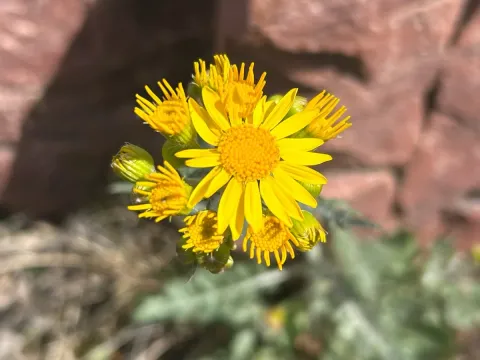
Prairie ragwort
Senecio plattensis
Prairie ragwort is a perennial herbaceous plant that reproduces primarily through seed dispersal in its native natural habitat.
What the section contains
Prairie ragwort
In cultivation, seeds are sown into prepared soil in early spring once the ground temperature reaches at least 10-12 degrees Celsius.
To ensure successful germination, the seeds require a period of stratification, which significantly improves the germination energy of the batch.
The sowing depth should be very shallow, ranging from 0.5 to 1 centimeter, as small seeds require adequate light exposure to trigger biological development.
Row planting with wide spacing is recommended to provide sufficient space for the basal rosette of leaves to develop fully during the first year.
This species is a typical representative of prairie flora, meaning it has significant requirements regarding sunlight exposure and site insolation.
The plant prefers well-drained sandy or loamy soils with a neutral or slightly acidic pH level for optimal growth and root health.
Prairie ragwort exhibits high drought tolerance, yet it requires moderate and regular watering during the peak phases of vegetative growth.
Providing proper aeration for the root system is critical, as stagnant water and poor drainage can lead to root rot and complete plant mortality.
The crop is highly adapted to significant temperature fluctuations characteristic of the temperate continental climates where it naturally occurs.
Fungal diseases pose the greatest threat to the crop, especially in environments with high humidity and poor air circulation around the foliage.
Powdery mildew is a common issue, manifesting as a white powdery coating on leaves which suppresses photosynthesis and weakens the plant.
Aphids and spider mites are the most dangerous pests, feeding on the cell sap of young shoots and causing significant deformation of the leaves.
Root rot caused by soil-borne pathogens can occur if the soil remains constantly waterlogged, necessitating careful management of the water regime.
To mitigate the risk of disease, it is recommended to remove damaged plant parts promptly and ensure adequate spacing between individual plants.