
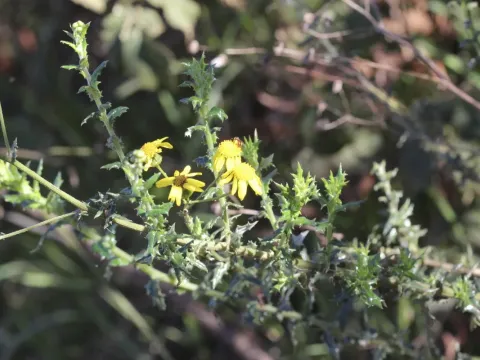
Senecio ilicifolius
Senecio ilicifolius
Senecio ilicifolius is a notable species within the Asteraceae family. Originating from the arid regions of South Africa, this perennial plant is characterized by its distinct, holly-like foliage, which serves as both an aesthetic feature and an evolutionary adaptation to its native habitat.
What the section contains
Senecio ilicifolius
The plant thrives in well-drained, sandy or gravelly soils. Given its natural habitat, effective drainage is the most critical factor for successful cultivation. Excessive soil moisture often leads to root rot, which is the primary cause of plant failure in non-native climates.
High levels of solar radiation are required for this plant to maintain its structural integrity and leaf coloration. Senecio ilicifolius performs best when exposed to direct sunlight for most of the day, as shaded conditions lead to weak stems and increased susceptibility to physiological disorders.
The climate requirements for this species are strictly centered around warm, dry conditions. It has a low tolerance for frost and prolonged cold, making it unsuitable for open-field cultivation in temperate regions without significant protective infrastructure like greenhouses.
Agronomic management involves periodic light fertilization to support growth without causing nitrogen-induced weakness. Pruning may be necessary to maintain a compact habit, especially if the plant is grown in containers to ensure air circulation throughout the foliage canopy.
Fungal pathogens represent the most significant threat to Senecio ilicifolius in agricultural settings. Preventive measures, such as soil aeration and regulated irrigation schedules, are essential to minimize the development of pathogens that target the root collar.
Pest management is focused on controlling spider mites and mealybugs, which are common in indoor and greenhouse environments. Implementing integrated pest management (IPM) practices, including biological controls or targeted miticides, ensures plant health and high quality of the horticultural product.