
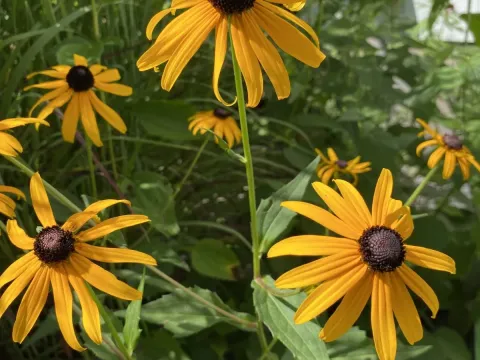
Rudbeckia sullivantii
Rudbeckia sullivantii
The sowing of Rudbeckia sullivantii seeds in open ground is typically scheduled for late spring, once the threat of frost has completely passed for the season.
What the section contains
Rudbeckia sullivantii
For gardeners looking to accelerate the bloom cycle, starting seeds indoors in late winter or early spring is recommended to ensure a head start on the growing season.
Seeds should be covered lightly with substrate and kept at a stable temperature of approximately 20 degrees Celsius to facilitate optimal germination rates.
Once seedlings have developed two sets of true leaves, they should be transplanted into individual containers to allow the root system to strengthen before final planting.
When transferring to the permanent garden bed, maintain a spacing of 40–50 centimeters to ensure adequate airflow and prevent the development of fungal diseases.
Rudbeckia sullivantii, a member of the Asteraceae family, is a herbaceous perennial native to North America, known for its vibrant gold-hued blooms.
The crop thrives in fertile, moisture-retentive, and well-drained soils, ideally with a neutral to slightly acidic pH level to support optimal nutrient uptake.
Being a sun-loving plant, it requires full sun exposure to maintain its structural integrity and produce a profusion of bright flowers throughout the season.
Proper water management is critical during the active growth phase; consistent irrigation during dry spells is necessary to prevent premature wilting of the foliage.
The plant demonstrates significant hardiness, but applying a layer of organic mulch around the base during winter can provide essential root protection against freezing.
The primary agricultural and horticultural value of Rudbeckia sullivantii lies in its use as a premium cut flower and a staple in professional landscape design.
To maximize flower production, it is advised to apply balanced NPK fertilizers in early spring and again mid-season to support vigorous stem and bud development.
Deadheading, or the removal of spent blooms, is an essential practice that encourages the plant to direct energy toward new floral output rather than seed production.
The yield of high-quality stems depends heavily on maintaining soil fertility and ensuring the plants are not overcrowded, which facilitates better light penetration.
When managed as a cut flower crop, growers often cultivate these plants in rows to simplify harvesting and monitoring for potential nutrient deficiencies.
Powdery mildew is a common concern for this species, characterized by white fungal patches on leaves, often triggered by high humidity and poor air circulation.
Root rot, resulting from waterlogged soil conditions, can severely compromise the plant's health, often leading to rapid decline if drainage is not improved.
Leaf nematodes can pose a significant challenge, often manifesting as necrotic spots between leaf veins and weakening the overall plant structure.
Aphids may target tender new shoots, necessitating early intervention with mild insecticidal soaps or biological controls to prevent spread to adjacent crops.
Effective management includes regular monitoring, the use of disease-resistant varieties, and maintaining a clean growing area by removing organic debris.
Harvesting for floral arrangements should occur in the morning when the flower buds are partially open but still firm, ensuring maximum longevity in the vase.
Following the first hard frost, the stalks should be pruned back to a few centimeters above the ground to prepare the root system for winter dormancy.
For those interested in saving seeds, selected flower heads should be left on the stalk until they turn deep brown and the seeds become hardened and dry.
After collecting the seeds, store them in a cool, dark, and dry place within breathable containers to maintain viability for the upcoming spring planting season.
Regular maintenance during the growing season includes checking for pest infestations during each harvesting round to ensure only healthy stems reach the market.