
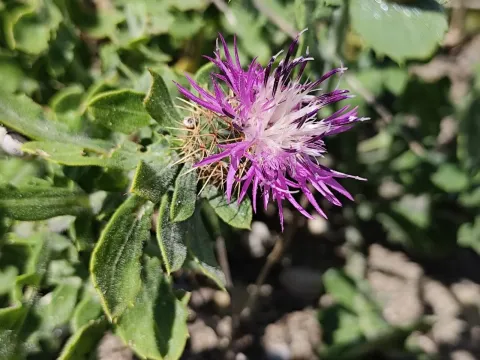
Round-headed knapweed
Centaurea sphaerocephala
The round-headed knapweed (Centaurea sphaerocephala) is a perennial herb belonging to the Asteraceae family. It is native to the Mediterranean region, where it has evolved to thrive in harsh, rocky, and often nutrient-poor environments.
What the section contains
Round-headed knapweed
This species is highly adapted to high light intensity and requires full sun exposure to maintain its biological cycle. It demonstrates remarkable tolerance to prolonged drought periods, making it a potentially sustainable crop for arid climates.
The soil requirements are specific: the plant demands excellent drainage. Loamy or sandy soils with a neutral to slightly alkaline pH are considered optimal for the development of its taproot system.
Agricultural management is generally low-input. Because of its resilience, the plant does not require heavy fertilization; conversely, excess nutrients can negatively affect its chemical composition and hardiness.
Its natural habitat includes coastal areas, which contributes to its salt tolerance. This makes it a valuable candidate for rehabilitation of degraded lands or as a specialized ornamental and medicinal crop.
Like many species in the genus Centaurea, this plant can be susceptible to powdery mildew, especially when cultivated in conditions with poor air circulation or high humidity levels.
Aphids represent a common pest threat, clustering on the young flower buds and leaves. Their feeding activities can cause significant stunting if not monitored during the active growing season.
Root rots are the most common issue in poorly drained soils. Pathogens such as Pythium or Phytophthora can compromise the plant's health, leading to wilting and eventual death.
Weevil larvae can potentially infest the flower heads, damaging the seeds. This is particularly concerning for growers intending to harvest the seeds for reproduction or medicinal oil production.
Management strategies involve crop rotation to break the cycle of soil-borne pathogens and regular scouting for early signs of pest infestation to minimize chemical interventions.