
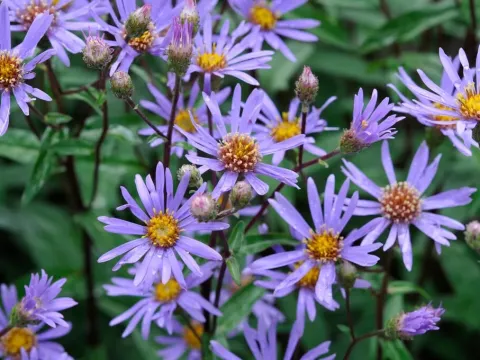
Rough-leaved aster
Aster radula
The rough-leaved aster (Aster radula) is a perennial herbaceous plant belonging to the Asteraceae family. Native to the eastern regions of North America, it is primarily found in wetland habitats, wet meadows, and edges of woodlands, reflecting its preference for moist environments.
What the section contains
Rough-leaved aster
Botanically, the species is defined by its distinct leaves which are notably rough to the touch, resembling the surface of a rasp. The plant typically reaches heights of 30 to 60 centimeters, producing violet to light blue flowers that bloom towards the end of the summer season, providing late-season nectar for pollinators.
Cultivation of this species requires moist, well-draining soil that is rich in organic matter. While it is adaptable to various soil types, maintaining consistent moisture levels is critical for its health. It thrives in locations that receive full sun to partial shade, showing high tolerance for cool climatic conditions.
In terms of agricultural practice, site selection is the most significant factor for long-term success. Once established, the plant is relatively low-maintenance, requiring only basic mulching to retain soil moisture and occasional pruning to remove spent blooms and encourage structural vigor for the following season.
The primary use of Aster radula is in landscape horticulture, particularly in restoration projects and native plant gardens. It is highly valued for its natural resistance to environmental stress and its ability to integrate into diverse ecosystems without becoming overly invasive in managed garden settings.