
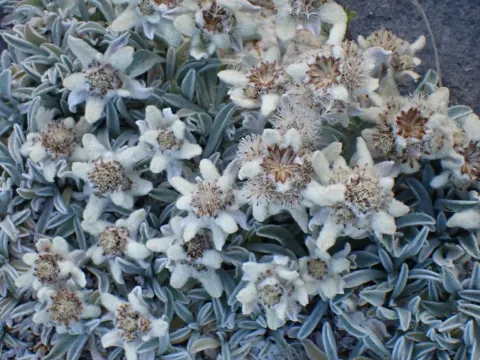
Leontopodium pusillum
Leontopodium pusillum
Leontopodium pusillum, a member of the Asteraceae family, is a miniature alpine species originating from high-altitude regions. Propagation is primarily through seeds, which require a cold stratification period of at least two months to ensure uniform germination.
What the section contains
Leontopodium pusillum
Seeds are surface-sown in a light, sandy substrate during early spring. Because the seeds are extremely small, they should not be covered with soil, but rather pressed gently into the surface to maintain contact.
The optimal temperature for germination ranges between 10°C and 15°C. Once the seedlings develop two sets of true leaves, they should be carefully pricked out into small individual pots to avoid root disturbance.
For vegetative propagation, division of mature clumps is performed in early spring. It is essential to ensure that each section maintains a portion of the root system to facilitate rapid establishment in the new location.
Growth in the first season is relatively slow, as the plant focuses on establishing its root system. Consistent but light moisture is required until the plant is fully established in its permanent garden location.
This species thrives in lean, well-draining mineral soils with a neutral to slightly alkaline pH. High-organic-matter soils should be avoided, as they retain too much moisture and lack the necessary aeration for alpine species.
Full sun is a critical requirement for Leontopodium pusillum. Inadequate light results in etiolation and the loss of the characteristic woolly tomentum that protects the leaves from intense radiation and desiccation.
The plant is highly drought-tolerant once established. Irrigation should be minimal and carefully controlled, as stagnant water around the crown or roots is the leading cause of plant mortality in temperate gardens.
Fertilization should be avoided, as high nutrient levels, especially nitrogen, lead to succulent, weak growth that is prone to pests and winter damage. The natural alpine environment is nutrient-poor, and the plant has adapted to these conditions.
A gravel mulch around the plant's crown is recommended to prevent the foliage from touching damp soil, which significantly reduces the risk of basal rot and fungal issues during humid weather.
Fungal pathogens associated with high moisture are the primary threat to this species. Root rot is particularly prevalent in poorly drained soils, making accurate site preparation the most important preventative measure.
Powdery mildew may occur if air circulation is insufficient or if local humidity remains high for extended periods. Pruning surrounding vegetation to improve airflow and selecting an open, airy site can mitigate this risk.
Pests such as aphids may occasionally attack the tender new growth during the active spring season. If detected, they can be managed with insecticidal soap or by physically removing the infested shoots.
Gastropods, such as slugs and snails, may pose a risk to young plants. Implementing physical barriers like crushed stone or using iron phosphate baits can help protect the foliage from damage.
The plant's inability to thrive in non-alpine conditions (e.g., heavy clay or high-humidity environments) is often mistaken for a disease, whereas it is actually a failure to replicate the species' natural environmental niche.