
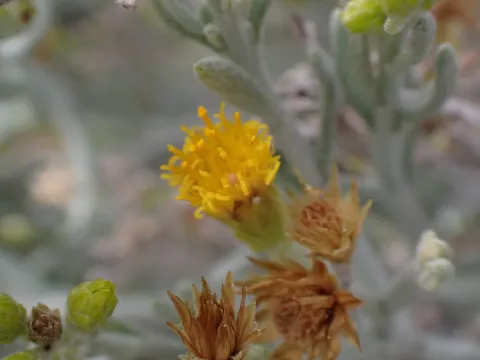
Schizogyne
Schizogyne
Schizogyne is a genus of semi-shrubby plants within the Asteraceae family. Native to the Canary Islands, these plants have evolved to thrive in specialized volcanic and arid environments, making them distinctive examples of island biodiversity.
What the section contains

Schizogyne
The botanical profile of Schizogyne is characterized by its adaptation to high light intensity and limited water availability. Its leaves and stems exhibit xerophytic traits, such as fine pubescence, which helps in moisture retention during long dry spells.
For cultivation purposes, these plants require soil that mimics their natural habitat—highly porous and well-draining. Adding sand or grit to potting mixes is essential to prevent root asphyxiation, which is the most common cause of failure in cultivation.
Regarding climate, Schizogyne requires full sun exposure to maintain its compact growth form. If grown in cooler regions, it must be kept in greenhouses or brought indoors during winter months to avoid frost damage, which it cannot tolerate.
Ornamentally, Schizogyne is valued for its unique texture and delicate flower heads. It serves as an excellent addition to rock gardens or xeriscapes, where its structural beauty can be showcased alongside other drought-tolerant species.
Root rot remains the primary threat to Schizogyne populations in horticultural settings. It is caused by improper watering techniques, specifically allowing the roots to sit in damp or waterlogged substrates for extended periods.
Pest management should focus on monitoring for sap-sucking insects like mealybugs and spider mites. These pests thrive in protected environments, so maintaining good airflow is a vital preventative measure.
Fungal infections can develop on foliage if the plant is subjected to high humidity with poor ventilation. Ensuring that the surface of the leaves stays dry and promoting airflow will significantly reduce the risk of mold and leaf spot.
During the winter dormancy period, physiological activity slows down, and water requirements drop significantly. Overwatering during this stage is a frequent cause of mortality and should be strictly avoided.
Integrated pest management strategies, focusing on early detection and biological control agents, are recommended for maintaining the health of these plants in a landscape or nursery environment.