
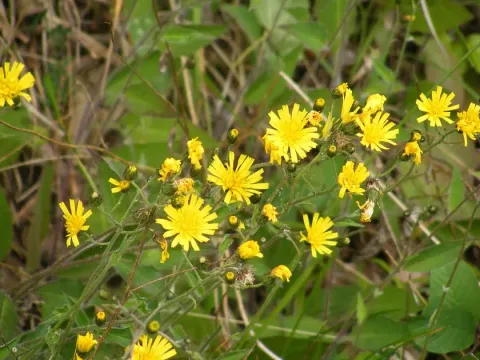
Hawkweed
Hieracium hybrids
Hawkweed is a perennial herbaceous plant belonging to the Asteraceae family. Sowing is typically carried out in early spring as soon as the soil temperatures consistently reach 10-12 degrees Celsius.
What the section contains
Hawkweed
For commercial cultivation, starting seeds in seed trays or nursery greenhouses is recommended to ensure uniform emergence and to protect the young seedlings from adverse weather.
Transplanting into the field should occur once the plants reach the 4-5 leaf stage, providing each plant with sufficient space to develop its basal rosette.
The seeds are relatively small and require surface sowing or very light covering with soil, as they depend on light exposure for optimal germination performance.
Fall planting is also a viable option in milder climates, allowing for early spring growth and better establishment of the root system during the temperate transition period.
The crop is highly versatile regarding soil types, performing best in light, sandy, or well-draining loamy soils that prevent water saturation at the root level.
Hawkweed prefers full sun exposure, which is crucial for the development of its characteristic foliage and the synthesis of secondary metabolites used in herbal applications.
While tolerant of low-nutrient substrates, the application of balanced, slow-release fertilizers during the active growth phase can significantly enhance overall biomass production.
Soil pH should ideally be neutral or slightly acidic; avoiding overly alkaline conditions is necessary to ensure the efficient uptake of micro-nutrients.
The plant demonstrates excellent resilience to various climate conditions, maintaining vitality even in drought-prone areas thanks to its efficient root architecture.
Powdery mildew represents the primary disease challenge for Hawkweed, especially in humid environments where airflow around the foliage is restricted.
Root rot, induced by waterlogging or poor drainage, can lead to the rapid decline of plant health, making drainage management a top priority for farmers.
Aphids are the most common insect pest, capable of colonizing the stems and leaves, which can lead to reduced plant vigor and stunted growth if left unmanaged.
Spider mites may occasionally occur during prolonged hot and dry spells, requiring localized intervention to prevent widespread damage to the harvestable biomass.
Integrated pest management strategies, including the use of beneficial insects and natural deterrents, are effective in maintaining the health of the plantation without excessive chemicals.