
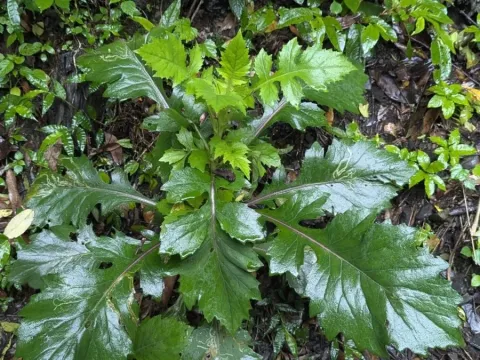
Gynura
Gynura Cass.
Propagation of Gynura in both commercial and amateur settings is most commonly achieved through vegetative methods, specifically stem cuttings. The optimal time for harvesting and planting cuttings is during the spring and summer periods when the plant is in its active growth phase.
What the section contains

Gynura
For successful rooting, cuttings approximately 10–12 cm long are placed into a moist substrate consisting of a mix of peat and sand. The use of rooting hormones significantly accelerates the survival rate and ensures quality planting material in a short period.
When propagating by seed, sowing is performed on the surface of a light, nutrient-rich soil mix, without burying the seeds too deeply. The containers are covered with transparent film to create greenhouse-like conditions and maintain constant moisture in the substrate.
Seed germination typically occurs at temperatures between +20–24 degrees Celsius over a two-to-three-week period. Once the second pair of true leaves appears, seedlings are pricked out into individual pots, providing sufficient space for root system development.
A critical factor in propagation is maintaining the correct lighting regime, as young plants are highly sensitive to low light levels, which leads to etiolation (stretching of stems) and a loss of the plant's aesthetic quality.
Gynura, belonging to the Asteraceae family, is a tropical plant native to regions in Asia and Africa. It requires consistently high temperatures and cannot withstand frost, which limits its cultivation in open ground to tropical and subtropical latitudes.
The plant prefers well-drained, fertile soils with a neutral to slightly acidic pH. It is essential to avoid waterlogging, which adversely affects the root system and can trigger the development of various types of root rot.
Lighting should be bright but indirect; direct sunlight can cause burns on the leaves, which are covered with characteristic purple hairs. Under insufficient light, the intensity of the coloration diminishes, and the stems become overly fragile.
Requirements for air humidity are moderate; however, during the summer, the plant responds positively to regular misting in its vicinity, provided that water droplets do not accumulate directly on the leaf blades for extended periods.
During the active growing season, Gynura requires regular fertilization with complex mineral fertilizers designed for ornamental foliage plants, applied at two-week intervals to support healthy growth.
The primary pests affecting this crop include spider mites and mealybugs, which frequently attack the plant when humidity levels in greenhouses or indoor spaces are consistently low.
Aphids and whiteflies can also cause significant damage by sap-sucking on young leaves, which leads to leaf deformation, yellowing, and premature senescence.
Fungal diseases, such as gray mold (Botrytis), develop primarily due to improper watering practices and poor ventilation in the area where the crop is grown.
To combat pests, it is recommended to use systemic insecticides or biological control agents, strictly following the application guidelines provided by the manufacturer.
Disease prevention consists of controlling soil moisture, maintaining sufficient spacing between plants to improve airflow, and performing regular inspections of the foliage to detect early signs of infestation or infection.