
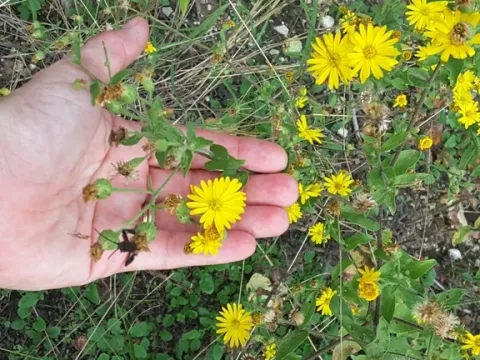
Heterotheca
Heterotheca
Heterotheca is a genus of plants belonging to the Asteraceae family, commonly known as goldenasters. These plants are recognized for their distinct yellow composite flowers and their ability to thrive in harsh environments. The genus includes both annual and perennial species, which show significant variation in height and branching patterns.
What the section contains
Heterotheca
Originating primarily from North America, Heterotheca species are naturally adapted to open, dry habitats such as prairies, sandy fields, and roadside verges. Their geographical range is broad, allowing them to occupy various ecological niches ranging from lowlands to more elevated, arid regions.
Regarding soil requirements, Heterotheca is notably undemanding. It prefers well-drained, sandy, or gravelly soils where nutrient levels might be insufficient for traditional crops. The plant possesses a robust taproot system that facilitates survival in nutrient-poor and drought-prone conditions.
Climatic requirements for Heterotheca involve full solar exposure. It is a heliophilic plant that requires significant amounts of light to achieve optimal growth and flowering. The species is highly tolerant to extreme heat, but it is susceptible to diseases when exposed to high humidity or poorly drained soil conditions.
In terms of practical agricultural use, Heterotheca is mainly utilized for its ornamental value in xeriscaping and as a beneficial pollinator plant. Some species are being studied for their potential in soil conservation due to their ability to stabilize loose, sandy ground and prevent erosion in degraded landscapes.