
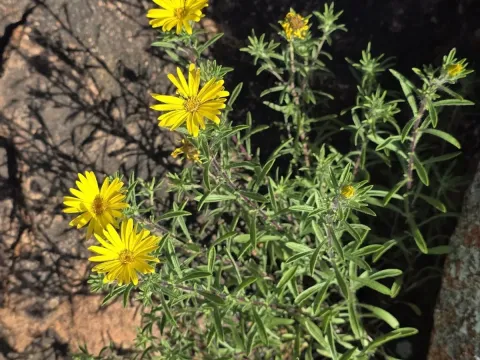
Heterotheca stenophylla
Heterotheca stenophylla
Heterotheca stenophylla, commonly known as the narrowleaf goldenaster, is a perennial herbaceous plant belonging to the Asteraceae family. It is native to the arid prairie regions of North America, where it has evolved to survive harsh, drought-prone environments.
What the section contains
Heterotheca stenophylla
This species thrives in well-drained, sandy, or rocky soils. It is highly valued for its exceptional drought tolerance, which allows it to maintain productivity even in semi-arid zones where traditional forage crops might fail.
Botanically, the plant is recognized by its narrow leaves and a pubescent stem structure. This surface hair serves as a protective layer, significantly reducing water loss during intense heatwaves and maintaining cellular turgidity.
In agricultural systems, it is predominantly utilized for land reclamation and as a component of resilient grazing pastures. Its deep root system also helps improve soil structure by minimizing wind erosion on marginal lands.
The crop does not require intensive fertilization, as it is adapted to nutrient-poor soils common in its natural range. Management practices focus on minimal disturbance to maintain the longevity of the plant population.
Fungal pathogens, particularly those affecting the foliage such as rusts, can become a problem in years with abnormally high precipitation, necessitating careful monitoring of the canopy health.
Seed-eating insects and various weevils can cause significant damage to the reproductive organs, which is a major concern for operations that rely on native seed harvesting for future planting cycles.
Competition from aggressive opportunistic weeds is the most significant threat during the seedling stage. Since the crop develops slowly at first, establishing a clear field before planting is essential.
Root rot caused by poor drainage during the winter is a common cause of stand failure. Ensuring that fields are located on well-sloping or naturally draining sites is vital for the survival of perennial stands.
Integrated pest management strategies should focus on scouting during the blooming phase to detect any early signs of infestation and to apply necessary measures only when thresholds are exceeded.