
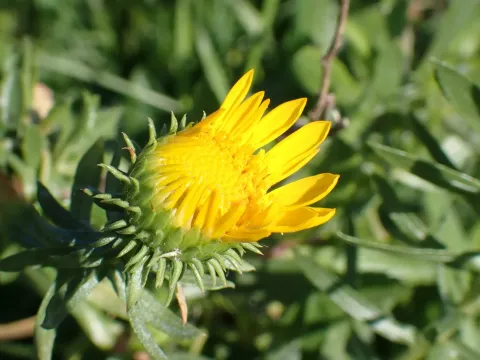
Gumweed
Grindelia robusta
Grindelia robusta, commonly known as gumweed, is a perennial herbaceous plant from the Asteraceae family often grown for its medicinal properties.
What the section contains
Gumweed
Sowing should take place in early spring when the soil temperature has stabilized, ensuring optimal conditions for seed germination and root establishment.
The seeds are small and should be sown at a shallow depth of approximately 1 to 2 centimeters to ensure they have enough energy to reach the surface.
Row spacing should be maintained at 50-60 centimeters to allow for adequate ventilation and mechanical weed control during the early growth stages.
Consistent moisture levels are essential immediately after planting to encourage uniform seedling emergence across the entire field.
Gumweed thrives in well-drained, sandy or gravelly soils that mimic its natural habitat in Western North America.
The plant is highly tolerant of full sun exposure, which is necessary to maximize the production of the sticky resin that coats the flower heads.
It prefers a slightly alkaline to neutral soil pH, which supports the overall vigor of the plant throughout the growing season.
Excessive irrigation should be avoided, as the species is adapted to arid environments and is susceptible to root rot if kept consistently wet.
Adequate spacing and air circulation are vital to prevent the development of foliage diseases during periods of high humidity.
Powdery mildew is a common fungal threat to gumweed, particularly in environments with poor air circulation or high atmospheric moisture.
Root rot can occur in poorly drained soils, leading to stunted plant growth and overall crop failure if not managed early.
Aphids and mites can infest the sticky flower heads, damaging the quality of the resin and reducing the commercial value of the raw material.
Integrated pest management, including the encouragement of beneficial insects, is recommended over the use of harsh chemical insecticides.
Regular field inspections are necessary to identify early symptoms of disease or infestation before they spread to the entire population.
Harvesting is performed during the peak flowering stage, which is when the resin content on the buds and stems is most concentrated.
The upper portions of the plants are harvested using mechanical harvesters or manual cutting methods depending on the scale of cultivation.
Immediate drying is required to stabilize the plant material, ideally in a cool, well-ventilated location away from direct sunlight.
Once dried, the product is processed to remove debris and impurities, ensuring it meets strict pharmaceutical industry standards.
The finished product is valued for its expectorant and anti-inflammatory properties, making it a stable commodity in the herbal medicine market.