
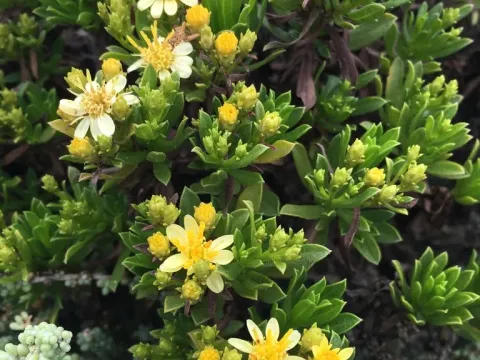
Gutierrezia
Gutierrezia
Gutierrezia, commonly known as snakeweed, is a genus of perennial plants in the Asteraceae family. These plants are native to western North America and parts of South America, thriving in arid environments.
What the section contains
Gutierrezia
The plant typically grows in open plains and rangelands with well-drained, sandy, or rocky soils. It is highly drought-tolerant, making it a dominant species in disturbed ecosystems.
Botanically, Gutierrezia is a herbaceous perennial or subshrub characterized by dense branching and narrow, resinous leaves. It produces numerous small, yellow flower heads during the late summer and autumn.
Its agricultural significance is primarily negative, as it is considered a rangeland weed. It competes with forage grasses and can be toxic to livestock, particularly cattle and sheep, when ingested in large quantities.
Management of the plant requires attention to rangeland health. It tends to proliferate in areas of overgrazing, where the lack of competitive ground cover allows it to establish extensive root systems.
The plant is susceptible to various fungal pathogens, including rusts and powdery mildew, which can thrive during unusually wet climatic cycles.
Insect pests, such as the snakeweed leaf beetle or specific moth larvae, often feed on the foliage and reproductive structures, acting as natural regulators of the plant's density.
Control strategies often involve herbicide application in early spring to prevent the plant from depleting soil moisture needed by more desirable forage species.
Controlled burning is another method used to manage dense infestations, though success depends on the timing and the availability of fuel to ensure a complete kill.
Integrating grazing management with biological control agents provides the most sustainable approach to preventing Gutierrezia from becoming invasive on productive pastures.