
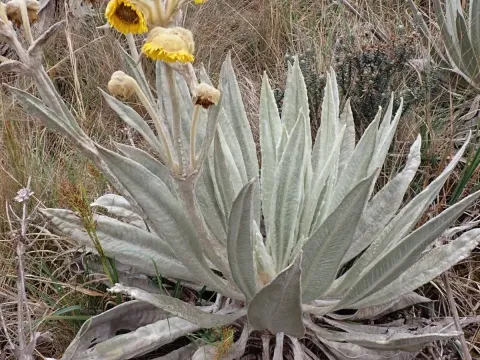
Espeletia
Espeletia
Espeletia is a genus of plants belonging to the Asteraceae family. These plants are iconic species of the high-altitude tropical Andean ecosystems known as paramo, typically found at elevations between 3000 and 4500 meters above sea level.
What the section contains


Espeletia
The morphology of the plant is highly specialized for cold and harsh environments. It features a dense rosette of pubescent (hairy) leaves that protect the apical meristem from freezing temperatures. These hairs play a crucial role in capturing moisture from fog and insulating the core of the plant.
Regarding soil requirements, Espeletia thrives in acidic, organic-rich, and well-drained volcanic soils. The plant acts as a biological sponge, regulating the hydrological cycle in high-altitude landscapes by absorbing water and slowly releasing it into the soil through its extensive root system.
Cultivation practices for Espeletia are essentially non-existent in commercial agriculture due to the plant's extremely slow growth rate and strict environmental specificity. Attempting to grow it outside of its native high-altitude habitat requires sophisticated climate-controlled environments to simulate low temperatures and high humidity.
The economic and practical use of this culture is primarily focused on environmental conservation. It is managed as a vital ecological species for protecting watershed areas in the Andes. Traditional uses, such as medicinal application or fiber harvesting, have been largely discouraged to protect the species' wild populations.
The main threats to Espeletia populations are climate change and land-use pressure. Rising temperatures force the paramo ecosystem to migrate to higher elevations, eventually running out of available land, which significantly reduces suitable habitat for the species.
Pathological threats include various soil-borne fungi that can cause rot if drainage is insufficient. Additionally, changes in soil chemistry due to pollution or excessive grazing by livestock in the paramo can weaken the plants, making them more susceptible to localized infestations of insects or bacterial infections.