
Espeletia pycnophylla
Espeletia pycnophylla
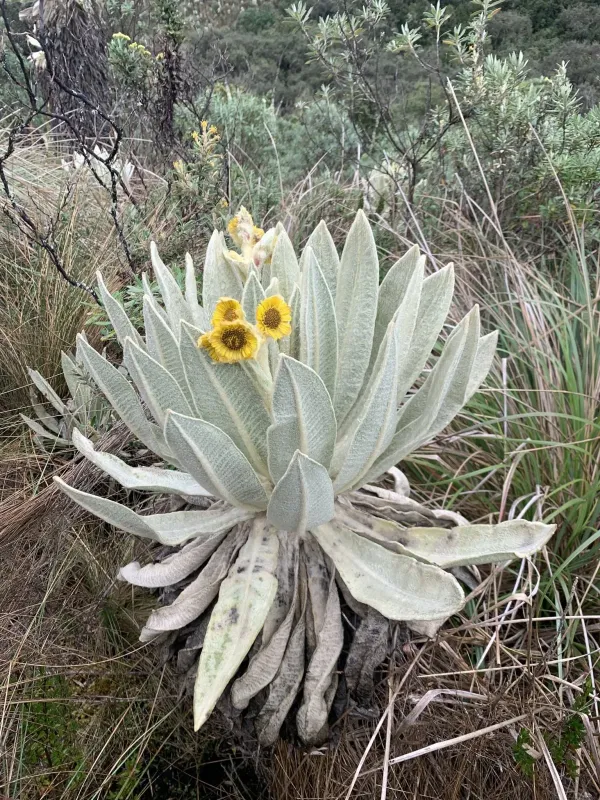
Description
Growing requirements
Espeletia pycnophylla, commonly known as a member of the "frailejones" group within the Asteraceae family, is a distinct perennial plant native to the high-altitude Andean ecosystems known as paramo. It is highly specialized for life in these extreme cold-tropical environments.
The botanical structure of the plant is characterized by a dense rosette of hairy leaves, which is a structural adaptation to trap heat and prevent dehydration. This leaf morphology allows the plant to flourish in climates where nightly frosts are common.
To support its growth, this species requires high atmospheric humidity and cool, stable temperatures. It is not a traditional agricultural crop but rather a specialized ecological component that depends on frequent mountain mists for water absorption through its foliage.
Regarding soil requirements, Espeletia pycnophylla prefers acidic, organic-rich, and well-drained soils. In cultivation, it is vital to avoid waterlogging while ensuring the root zone remains consistently moist to mimic its natural environment in the high mountains.
Its хозяйственное usage is primarily focused on environmental conservation and scientific research. It serves as an essential hydro-regulator for mountain watersheds, and its protection is considered vital for the regional water supply in the Andes.
Main diseases and pests
The primary threats to this species include land-use changes, particularly the conversion of paramo ecosystems into pastures for grazing, which severely degrades the natural habitat.
Frequent fires, often caused by human activity, pose a critical danger to these slow-growing plants, as they possess low resilience to burning and limited mechanisms for rapid recovery.
Pathogenic threats are usually associated with environmental stress, such as drought or inappropriate thermal conditions, which weaken the plant and make it susceptible to opportunistic infections and soil-borne diseases.