
Espeletia schultzii
Espeletia schultzii
Description
Growing requirements
Espeletia schultzii is a perennial succulent plant belonging to the Asteraceae family, native to the high-altitude Andean paramo ecosystems of Venezuela and Colombia. It is highly specialized for environments characterized by extreme diurnal temperature fluctuations and high humidity.
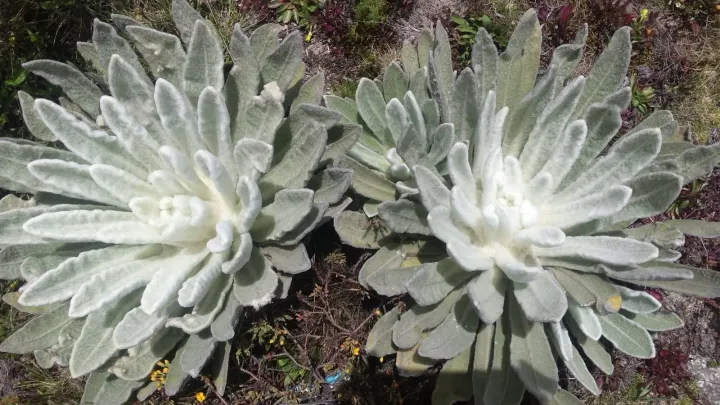
The plant features a distinct rosette of dense, hairy leaves that trap moisture and insulate the apical meristem against sub-zero temperatures. Agriculturally, it serves as a subject for research in ecological restoration and sustainable land management in mountain regions.
Successful cultivation of Espeletia schultzii requires mimicking its natural habitat, including well-draining, acidic, peat-rich soils. The plant is notoriously sensitive to waterlogging, necessitating precise moisture management in any cultivation environment.
Growth rates are exceptionally slow, making this species unsuitable for intensive agricultural cycles but highly valuable for environmental stability. The plant acts as a natural water reservoir, contributing significantly to the hydrological balance of its native habitats.
Cultivators must ensure cool temperatures and consistent solar radiation. The plant does not respond well to high-nutrient fertilizers, as it has adapted to nutrient-poor soils and will suffer physiological stress from an excess of nitrogen or phosphorus.
Main diseases and pests
The primary threats to Espeletia schultzii include fungal infections triggered by excessive soil moisture and stagnant air. These conditions cause rapid decay of the leaf rosette and can lead to irreversible root rot.
Pest management is challenging in high-altitude conditions, as the dense pubescence of the leaves can harbor specialized insects. Biological control methods are preferred, as chemical applications often disrupt the fragile balance of the paramo ecosystem.
Mechanical damage from grazing livestock remains a major concern, as the plant's structure is easily crushed. Restricting access to areas populated by these plants is essential for their long-term viability in agricultural landscapes.
Climate change poses a severe risk to the species by altering precipitation patterns and introducing new pathogens. The decline in suitable environmental conditions often leaves the plants susceptible to secondary bacterial infections.
Agricultural intervention must prioritize preventive care, such as ensuring proper soil aeration and avoiding physical contact with the leaf surfaces. Constant monitoring of leaf color and turgor is required to detect early signs of stress before the damage becomes critical.