
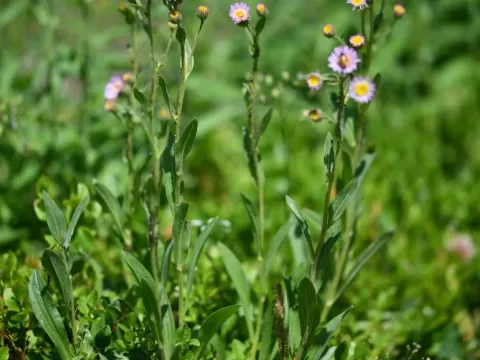
Erigeron atticus
Erigeron atticus
Erigeron atticus, a member of the Asteraceae family, is a resilient perennial plant valued for its compact growth and abundant flowering. It is an excellent choice for rock gardens and borders due to its ability to thrive in diverse environments.
What the section contains
Erigeron atticus
Sowing should ideally take place in early spring once the danger of hard frost has passed. Seeds can be sown directly into prepared garden beds, where they prefer a sunny location with exposure to natural light for the majority of the day.
For indoor propagation, sowing in seed trays during late winter is recommended. Use a well-draining, sterile potting mix to ensure that seedlings develop healthy roots without the risk of damping-off disease common in indoor setups.
Seedlings should be hardened off before being transplanted outdoors. This acclimatization process helps the plants adapt to fluctuating outdoor temperatures and winds, significantly improving their survival rate once established in the ground.
Spacing is a critical factor for success. Maintaining a distance of 25-30 centimeters between plants ensures proper airflow, which is essential for minimizing fungal outbreaks and promoting vigorous structural development.
The primary requirement for Erigeron atticus is soil with excellent drainage. While the plant is quite hardy, it will not tolerate waterlogged conditions, which are the most common cause of failure in its cultivation.
Regarding soil composition, this plant is not overly demanding. It performs well in neutral to slightly alkaline soils, including rocky or gritty substrates that mimic its natural alpine or high-altitude habitat origins.
Watering should be managed consistently but cautiously. During hot summer months, deep watering once or twice a week is superior to frequent shallow sprinkling, as it encourages the roots to grow deeper into the soil.
Minimal fertilization is usually sufficient for this species. An application of a balanced slow-release fertilizer in early spring is generally enough to support the seasonal growth cycle and provide nutrients for prolific blooms.
Pruning is an essential maintenance task. By removing spent blossoms, gardeners can prevent the plant from putting energy into seed production, thereby extending the flowering window throughout the late spring and summer months.
Powdery mildew is the most prevalent disease, especially during periods of high humidity. It presents as a white, dusty growth on foliage, which can be mitigated by ensuring proper spacing between plants and adequate sunlight.
Root rot remains the most significant threat to Erigeron atticus. This condition is almost exclusively linked to poor soil drainage and over-irrigation. Prevention through careful site selection and soil amendment is key.
Common pests include aphids and mites, which tend to congregate on the tender tips of young shoots. Regular monitoring of the foliage is recommended to catch infestations before they can cause widespread damage to the plant.
Integrated pest management strategies, such as using natural predators or targeted organic sprays, are preferred over broad-spectrum pesticides. Maintaining plant vigor through proper care significantly increases its natural resistance to damage.
Seasonal site maintenance, including clearing away old mulch and fallen plant debris, helps reduce the overwintering sites for fungal spores and insect pests, contributing to a healthier environment for the plant during the growing season.