
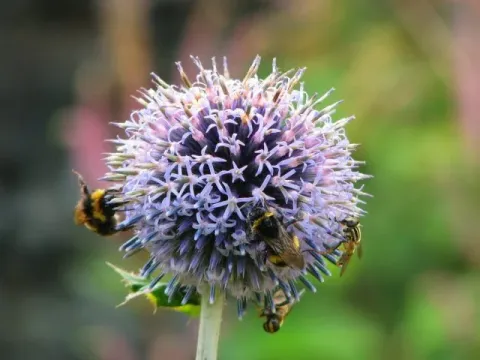
Echinops acantholepis
Echinops acantholepis
Echinops acantholepis is a perennial herbaceous plant belonging to the Asteraceae family. Its seeds exhibit excellent germination rates when sown in well-prepared soil once ground temperatures stabilize above 10-12 degrees Celsius.
What the section contains
Echinops acantholepis
Cultivation is typically conducted in rows spaced 45 to 60 centimeters apart. This spacing ensures that each plant receives sufficient nutrients and light, which is crucial for the development of the basal leaf rosette during the first season.
The optimal sowing depth is approximately 2 to 3 centimeters, providing the seed with adequate moisture contact while allowing for robust sprout emergence. This depth also helps protect seeds from drying out during the initial germination phase.
Late autumn sowing is also a viable strategy, as it exposes seeds to natural stratification. This technique often results in more vigorous plant development during the subsequent spring, as the plant takes full advantage of early season soil moisture.
Avoiding overly dense sowing is essential for long-term productivity. Proper spacing prevents the competition for resources that can lead to stunted flower head development, ensuring consistent yields of nectar and seeds in future years.
##requirements##This species is exceptionally drought-tolerant, making it highly suitable for arid and semi-arid agricultural environments. It thrives in full sun and requires unobstructed light exposure to achieve its full potential for nectar production.
The plant is highly adaptable to various soil types, including sandy, loamy, and rocky soils. However, good drainage is a critical requirement, as excessive moisture in the root zone can cause decay and plant mortality.
Echinops acantholepis is capable of growing on degraded, salty, or nutrient-poor land, functioning effectively as a soil restorer. Its deep root system helps prevent erosion and improves soil structure over several growing seasons.
While hardy, the plant responds well to moderate applications of potassium and phosphorus fertilizers, which enhance its overall vigor and cold hardiness. Over-fertilization with nitrogen should be avoided to prevent excessive green growth at the expense of flowering.
A climate with hot, dry summers is ideal for this crop, as it stimulates high levels of nectar secretion. Excessive rainfall during the peak flowering period can negatively impact honey production, making dry climates the most favorable for apiculture.
The primary economic value of Echinops acantholepis lies in its role as a premier honey plant. It is highly attractive to bees, offering a reliable nectar source even during hot summers when many other plants cease to bloom.
The honey produced from this plant is renowned for its high quality, delicate aroma, and slow crystallization process. These characteristics make it a sought-after product that maintains high market value among commercial beekeepers.
Beyond apiculture, the seeds contain unique chemical compounds, including alkaloids such as echinopsine, which have potential applications in the pharmaceutical and veterinary industries for their medicinal properties.
The plant also provides a yield of decorative flower heads. These globe-shaped structures are highly valued in the dried flower market, as they retain their shape and structural integrity long after harvesting.
As a multi-year crop, it provides stable annual returns without the need for yearly soil tillage or replanting. This lowers operational costs and enhances the financial sustainability of farms integrated with honey production.
Echinops acantholepis is naturally resistant to many common agricultural diseases due to its rugged biological structure. Its spiny leaves and dense hairs act as a natural deterrent against many leaf-eating insects.
However, under conditions of high humidity or poor soil drainage, the plant can be susceptible to root rot and fungal infections. Maintaining proper spacing and selecting well-draining fields is the most effective preventative measure.
Aphids can occasionally colonize young shoots during abnormally cool and wet springs. In such instances, biological controls or targeted, bee-safe interventions are recommended to keep populations under control without impacting pollinators.
Weed competition is only a threat during the initial establishment phase of the first year. Once the basal rosette is fully developed, the plant effectively shades the ground, naturally suppressing the growth of unwanted vegetation around it.
The overall resilience of this species against environmental stressors makes it an excellent candidate for low-input, organic farming systems. Its ability to thrive without intensive pesticide use is a major advantage for sustainable honey production.
The honey harvest season coincides with the mass flowering phase, which usually occurs from mid to late summer. Beekeepers should position hives near fields during this window to maximize the collection efficiency of the foragers.
Seed harvesting should be performed when the flower heads turn brown and become dry to the touch. It is crucial to monitor the maturity of the seeds to prevent natural dispersal caused by wind or mechanical vibration.
Harvested heads are typically threshed using specialized machinery adjusted for small seeds, followed by cleaning and drying in well-ventilated areas. Maintaining low moisture content in the seeds is vital for storage longevity.
For the decorative market, stems are cut when the flower heads are fully mature but before they start to fall apart. They should be hung in bundles, head-down, in a shaded and airy location to ensure uniform drying.
Post-harvest residues can be incorporated into the soil via disc harrowing, which adds organic matter back to the field. This practice supports soil fertility and health for subsequent cycles without heavy chemical intervention.