
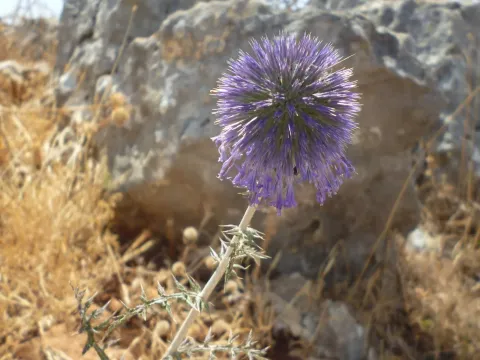
Echinops adenocaulos
Echinops adenocaulos
Echinops adenocaulos is a robust perennial herb belonging to the Asteraceae family. In agricultural practices, sowing is usually conducted in early spring or late autumn to prepare the soil for active germination.
What the section contains
Echinops adenocaulos
Seeds often require stratification to break dormancy, ensuring a more uniform emergence rate. Seeds should be planted at a depth of 1.5 to 3 centimeters in well-drained soil.
The recommended planting density involves maintaining row spacing of 45–60 centimeters, which provides sufficient space for root development and prevents competition for sunlight.
Seedlings typically emerge within two to three weeks under optimal temperature conditions. It is essential to ensure the soil surface remains loose to avoid hindering the growth of the young sprouts.
As a highly resilient species, it is frequently utilized for land rehabilitation and as a low-maintenance cover crop in areas where other agricultural plants struggle to thrive.
This crop thrives in sunny, open locations as it is highly photophilous. Reduced sun exposure significantly diminishes both vegetative growth and its vital nectar-producing capacity.
Echinops adenocaulos is not demanding regarding soil fertility; however, it performs best in light, sandy, or loamy soils that offer excellent drainage and aeration.
The plant possesses a deep taproot system, making it exceptionally drought-tolerant. Conversely, it is highly sensitive to waterlogged soils, which can lead to root decay and overall plant failure.
Applying mineral fertilizers, particularly potassium and phosphorus during the budding stage, promotes vigorous flowering and higher honey yields. Nitrogen should be used sparingly.
Given its high winter hardiness, this plant can successfully overwinter in temperate climates, allowing for multi-year production without the need for constant field replanting.
The primary agricultural utility of Echinops adenocaulos is its value as a premier honey plant, supporting apiculture throughout the late summer season.
Under favorable conditions, honey yields can reach between 400 and 600 kilograms per hectare. The resulting honey is highly prized for its light color, delicate aroma, and slow crystallization.
The seeds of this plant are also commercially valuable, containing bioactive compounds such as echinopsine, which are utilized in the pharmaceutical industry for medicinal extracts.
The crop serves as a dual-purpose asset, providing essential forage for pollinators while simultaneously producing valuable herbal materials for industrial processing.
Post-harvest processing involves careful drying and cleaning, ensuring that the final material meets the quality standards required for pharmaceutical and botanical use.
The main pests affecting this crop include aphids and specific leaf beetles, which can damage foliage and floral organs, leading to reduced nectar production.
High air humidity can promote the development of fungal infections like powdery mildew. Maintaining proper planting density ensures adequate ventilation, which is the best preventative measure.
Root rot is rarely observed unless the plants are grown in poorly drained areas. Effective soil moisture management is critical for sustaining long-term plant health.
Since this is a major honey crop, the use of chemical pesticides should be strictly limited to avoid harming bees. Biological control agents are preferred for pest management.
Preventative weeding in the early stages of growth is recommended to eliminate secondary host plants that might harbor harmful pests or pathogens.
Harvesting flower heads for botanical purposes should take place during the peak flowering season, preferably in dry weather to optimize the quality of the raw material.
Seed collection is performed once the flower heads turn brown. Timing is crucial to prevent the seeds from dispersing naturally due to wind as they ripen.
Once harvested, the material must be dried in a well-ventilated, shaded area at temperatures not exceeding 40 degrees Celsius to preserve volatile compounds.
Threshing is performed using mechanical equipment, followed by a seed cleaning process to remove fluff and debris using air aspiration systems.
The final product should be stored in breathable containers in a low-humidity environment to maintain seed viability and the integrity of medicinal components over time.