
Stinkwort
Dittrichia graveolens (L.) Greuter
Description
Growing requirements
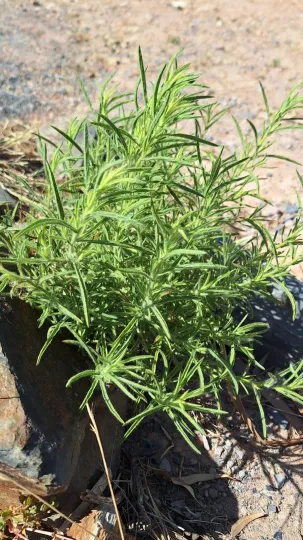
Stinkwort (Dittrichia graveolens) is an annual herb from the Asteraceae family. Known for its strong, pungent odor, it is considered a significant weed in many agricultural regions, especially in Mediterranean-type climates.
Originating from the Mediterranean basin, the species has successfully naturalized in many parts of the world, including North America and Australia. It thrives in disturbed habitats, roadsides, and agricultural fields where soil moisture is relatively low during summer.
The plant has specific requirements for high light intensity. It is extremely drought-tolerant, possessing glandular hairs that secrete essential oils, which help reduce water loss and protect the plant from high solar radiation.
Regarding soil preference, it is versatile. It can grow in sandy, gravelly, and even somewhat saline soils, provided they offer good drainage. It is rarely found in waterlogged or strictly shaded environments.
The botanical structure consists of a branched, sticky stem and lanceolate leaves. Flowering typically occurs in late summer or autumn, producing numerous yellow flower heads that generate wind-dispersed seeds in vast quantities.
Main diseases and pests
Fungal pathogens represent the primary threat to the health of Dittrichia graveolens. Root rot and stem blight are common in environments with poor ventilation or excessive late-season rainfall.
Insect pests, particularly aphids and certain lepidopteran larvae, can infest the foliage and flower heads. These pests extract sap and can cause physiological stress, although the plant's essential oils offer some level of natural defense.
Management of this plant requires integrated control methods. Because it reproduces exclusively by seed, preventing seed set is the main goal in any agricultural management program.
Tillage and hand-pulling before the onset of flowering are effective mechanical interventions. It is crucial to monitor field margins to prevent seed dispersal into high-value crop areas.
Biological control research is ongoing in several countries, but currently, chemical management using selective herbicides remains the standard for large-scale infestations in arable land.