
Crupina vulgaris
Crupina vulgaris Cass.
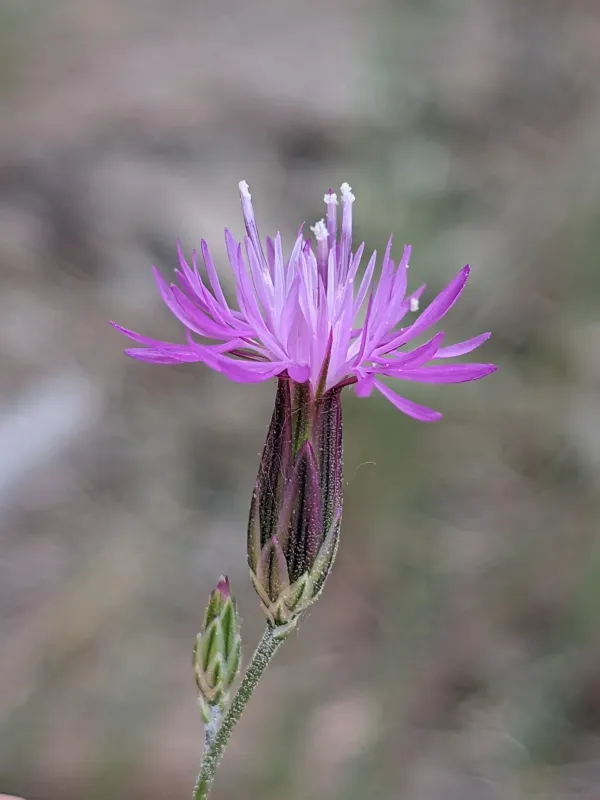
Description
Growing requirements
Crupina vulgaris, commonly known as common crupina, is an annual herbaceous plant belonging to the Asteraceae family. As a significant segetal weed, it frequently colonizes agricultural lands, particularly cereal fields, pastures, and disturbed soil environments.
The plant originates from the Mediterranean region and Southwest Asia. Over time, it has established itself across diverse climates in Europe and has been introduced to North America, where it is often managed as an invasive species due to its competitive nature.
Botanically, it is characterized by an upright, branched stem and feathery leaves. It features a robust taproot system, which allows it to thrive in dry and nutrient-poor environments, making it a highly successful competitor against standard crop varieties.
It prefers well-drained, sunny habitats and shows high adaptability to various soil types, including calcareous and heavy clay soils. Its ability to tolerate dry conditions gives it a significant advantage during the summer months in temperate regions.
The plant reproduces strictly through seed production. A single plant can produce a large number of seeds, which are dispersed primarily by wind, water, and human activity through contaminated farm equipment, facilitating its rapid expansion in agricultural zones.
Main diseases and pests
Crupina vulgaris poses a threat to agricultural productivity by competing for essential resources like light, water, and soil minerals. High infestation levels in grain crops can lead to measurable yield losses and increased costs for field maintenance.
In grazing lands, common crupina is considered an undesirable species. Once it reaches the flowering stage, the plant becomes coarse and unpalatable to livestock. Its presence in pastures can reduce the carrying capacity and the overall nutritional value of the forage.
Regarding diseases, the plant is susceptible to common fungal pathogens affecting the Asteraceae family, such as powdery mildew and rusts. While these pathogens can impact individual plants, they rarely effectively curb the population spread of this aggressive weed.
Insect pests, including various aphids and true bugs, are commonly found feeding on the foliage of this plant. While these pests occasionally cause damage, they are not effective biological control agents and often serve as vectors for other agricultural issues.
Effective management requires integrated weed control strategies, including mechanical removal and the use of targeted herbicides. It is crucial to intervene before the seeds mature, as the seed bank in the soil can remain viable for several seasons.