
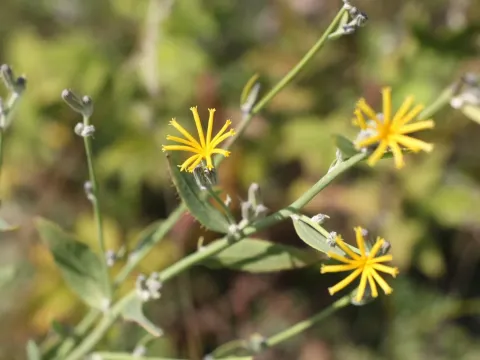
Chondrilla latifolia
Chondrilla latifolia
Chondrilla latifolia is a perennial herbaceous plant belonging to the Asteraceae family. In agricultural settings, it is primarily recognized as a persistent weed rather than a cultivated crop due to its invasive nature.
What the section contains
Chondrilla latifolia
The life cycle begins with seed germination, which is highly dependent on spring soil temperature. The seeds demonstrate high viability and can persist in the soil bank for multiple seasons before sprouting.
Propagation occurs through both sexual reproduction via seeds and vegetative regeneration from its extensive root system. This dual reproductive strategy makes it highly resilient to standard agricultural practices.
Germination typically occurs when soil moisture levels are adequate, often following spring rains. Seedlings establish a taproot very early, which facilitates rapid survival in competitive field environments.
From an agrotechnical perspective, management requires a strategy that exhausts root reserves, typically involving a combination of deep tillage and competitive crop rotation cycles.
This plant exhibits remarkable ecological plasticity, allowing it to thrive in arid steppe climates and various soil types. It is particularly well-adapted to environments where other crops struggle due to moisture stress.
The plant demands high light intensity and is intolerant of dense shading. Consequently, optimizing crop density and canopy cover serves as a primary non-chemical method for suppressing its growth.
Chondrilla latifolia grows efficiently in a range of soil textures, including sandy and rocky soils with low nutrient content. It favors neutral to slightly alkaline pH levels for optimal development.
Its deep root architecture provides a significant advantage in water acquisition, allowing the plant to sustain growth even during prolonged drought periods that might inhibit other plant species.
Regular mechanical disturbance of the soil is necessary to damage the root crown. Without such interventions, the plant can establish a dominant position within the local flora of the field.
The plant is generally robust against most agricultural pathogens. While it may occasionally show signs of powdery mildew under conditions of high humidity, these infections rarely threaten the survival of a population.
Specific insect species may act as natural herbivores; however, they do not provide sufficient control to manage populations in commercial agricultural systems without supplemental measures.
Chemical herbicides are the most common tool for management. Selective or systemic herbicides are often employed to target the root system, preventing the regrowth of the plant after mechanical damage.
Effective weed management plans should prioritize early identification and localized treatment. Due to its perennial nature, waiting until the plant is fully mature significantly reduces the efficacy of control.
Integration of biological and mechanical strategies remains the best approach to mitigate the economic losses associated with the encroachment of this plant into cultivated areas.