
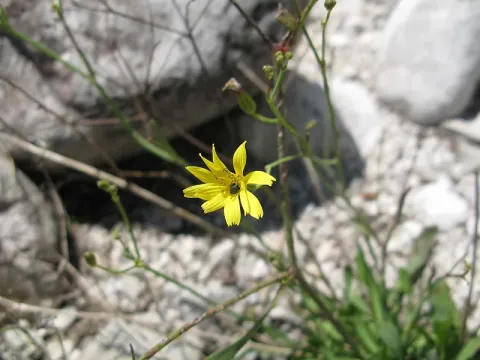
Chondrilla chondrilloides
Chondrilla chondrilloides
Chondrilla chondrilloides is a perennial herbaceous plant belonging to the Asteraceae family. Known for its remarkable resilience, this species is increasingly studied for its ability to thrive in harsh environments that are typically unsuitable for traditional crops.
What the section contains
Chondrilla chondrilloides
The plant features a profound taproot system, which serves as a reservoir for nutrients and allows it to access water from deep soil profiles. This biological structure is the key to its survival in arid and semi-arid conditions where other flora often struggle to establish.
Successful cultivation requires well-drained, sandy, or light-textured soils. Proper aeration is crucial, as the root system is highly sensitive to hypoxia caused by waterlogging. Farmers should prioritize sites with excellent drainage to ensure long-term stand viability.
Climate requirements for this plant focus on high light availability and warm temperatures during the active growing season. While it is highly drought-tolerant, its growth rate and biomass production are optimized when there is a steady but moderate supply of moisture in the spring.
Agronomic management involves selecting appropriate planting densities to minimize competition for nutrients. Regular field monitoring is necessary to adjust moisture levels and ensure the plants are not subject to excessive weed pressure during their establishment phase.
Chondrilla chondrilloides can be affected by various fungal pathogens, especially during periods of high humidity. These diseases typically manifest as leaf and stem spotting, which can impair the plant's ability to undergo photosynthesis efficiently.
Insect pests such as aphids and specific beetles may cause damage by feeding on young stems and developing buds. Integrated pest management strategies are recommended to keep populations below the economic injury level without causing unnecessary ecological harm.
Root-feeding larvae represent another significant threat, particularly in soils where the plant has been cultivated for several consecutive seasons. Proper crop rotation is essential to break the life cycle of these subterranean pests.
The use of balanced fungicide and insecticide applications can prevent localized outbreaks from turning into field-wide problems. It is vital to time these interventions based on early detection of symptoms during regular scouting.
Developing a robust plant health plan ensures that the crop maintains its yield potential throughout the entire growing season, effectively mitigating risks associated with environmental and biotic factors.