
Chromolaena
Chromolaena
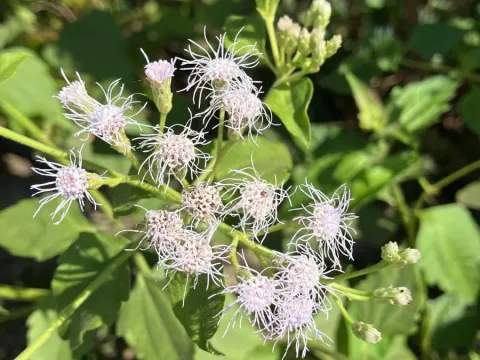
Chromolaena is a genus of flowering plants in the sunflower family, Asteraceae. The most recognized species, Chromolaena odorata, is a perennial shrub that serves as a prime example of a highly aggressive invasive plant in tropical and subtropical regions.
What the section contains
Chromolaena
Originating from the Americas, the plant has established a significant range across Africa, Southeast Asia, and the Pacific Islands. It is often referred to in agricultural circles as a problematic weed that disrupts local biodiversity and disrupts plantation productivity.
The plant exhibits remarkable adaptability to various soil types, ranging from nutrient-poor sandy soils to fertile volcanic loams. It thrives in open, disturbed areas, making it a constant threat to cleared agricultural lands and forestry sites.
Chromolaena requires consistent access to solar radiation to maintain its rapid biomass production. It is drought-tolerant, which allows it to remain green and vigorous while many other plants struggle during the dry season, giving it a competitive advantage.
Management techniques are primarily centered on containment. Because the plant produces thousands of seeds that are easily dispersed by wind, preventing the transition into the flowering stage is critical for any effective agricultural weed management program.
Chromolaena is recognized for its ability to devastate pasture land and crop fields. By forming dense monocultures, it effectively prevents the growth of any other vegetation, leading to the abandonment of grazing lands.
The plant is known for its allelopathic properties, as it secretes chemical compounds into the soil that inhibit the germination of seeds and the growth of other plants. This effectively "sterilizes" the soil for most standard crops.
While the plant has its own biological enemies in its native range, it lacks such natural control mechanisms in invaded territories. This leads to explosive population growth in regions like Southeast Asia and West Africa.
In terms of pests, Chromolaena can become a reservoir for various generalist insects. Agriculturalists must be aware that clearing these weeds might cause temporary spikes in pest activity on nearby cultivated crops as insects migrate.
Long-term control relies heavily on integrated pest management (IPM). This includes manual pulling of roots, repeated mowing, and the application of herbicides specifically formulated to tackle woody, deep-rooted invasive perennials.