
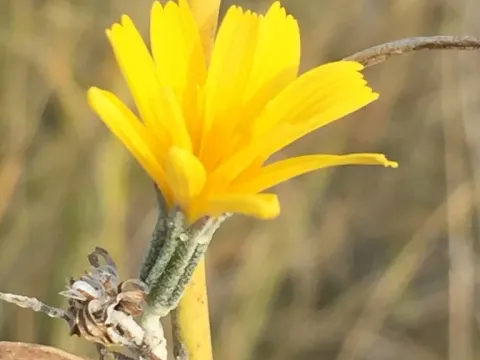
Chondrilla
Chondrilla
Chondrilla (common name: skeleton weed) is a genus of flowering plants in the family Asteraceae. These plants are widely recognized for their resilience and their status as aggressive weeds in many agricultural regions globally.
What the section contains

Chondrilla
The plant originates from the arid and semi-arid regions of Eurasia, thriving in habitats where other vegetation might struggle due to limited water availability or poor soil quality.
It prefers well-drained, sandy, or gravelly soils and requires full sun exposure to achieve optimal growth and reproduction rates. It is highly intolerant of waterlogged conditions and acidic soil environments.
Botanically, it is characterized by a deep, persistent taproot system that can reach several meters into the soil profile. The plant also produces a milky latex, which historically made it a subject of interest for rubber production studies.
Its ability to propagate both by seeds and via vegetative root buds makes it an extremely difficult plant to manage in large-scale crop production systems.
Chondrilla is susceptible to various fungal pathogens, specifically rust fungi, which have been extensively researched as potential biological control agents to manage its populations in agricultural settings.
As a weed, it provides a habitat for various insects, including some that can act as vectors for viruses that negatively affect cereal crops and other cultivated species.
The primary threat posed by this plant is its ability to compete for moisture and nitrogen, significantly reducing crop yields in dryland farming systems.
Successful management typically requires an integrated approach, involving deep cultivation, competitive cropping, and strategic herbicide application to exhaust the root system's reserves.
Due to its deep root architecture, simple surface weeding is ineffective, as the plant can rapidly regenerate from any significant root fragments left behind during cultivation.