
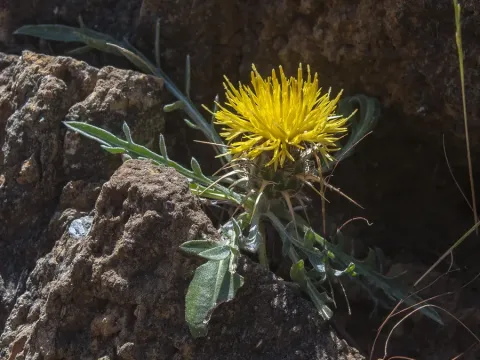
Centaurea haenseleri
Centaurea haenseleri
Centaurea haenseleri is a perennial herbaceous plant belonging to the Asteraceae family. It is a rare endemic species primarily found in the rocky limestone terrain of southern Andalusia, Spain.
What the section contains
Centaurea haenseleri
The cultivation of this plant requires specific soil conditions. It thrives in well-draining, alkaline, and gritty substrates that mimic its natural habitat on rocky slopes.
This species is highly adapted to arid conditions and acts as a true xerophyte. Consequently, it requires minimal watering, and it is crucial to ensure that water never stagnates near the roots to prevent decay.
Full sun exposure is essential for the healthy development of Centaurea haenseleri. Without intense light, the plant will fail to thrive and may lose its compact, robust growth habit.
In terms of usage, this plant is valued by specialized collectors and landscape designers for creating low-maintenance, drought-tolerant, and decorative rock gardens.
The primary threat to the health of Centaurea haenseleri is fungal root rot. This condition is almost always caused by excessive soil moisture or improper drainage in the cultivation area.
Powdery mildew is a common concern during periods of high humidity. It can quickly spread across the foliage, necessitating prompt fungicide treatment to preserve the plant's health.
Insect pests, particularly spider mites and aphids, can cause significant damage during hot and dry spells, as they tend to congregate on the succulent parts of the plant.
Competing vegetation poses a threat by obstructing light and altering the humidity profile around the plant's base, which can weaken its natural resilience.
Regular maintenance, including careful weeding and routine inspections of the leaves and stems, is vital to mitigate the risk of pest infestations and early-stage diseases.