
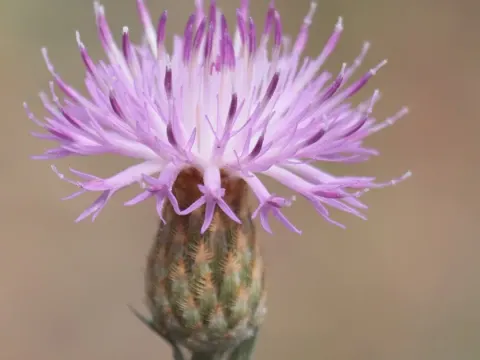
Centaurea exarata
Centaurea exarata
Centaurea exarata is a perennial herbaceous plant belonging to the Asteraceae family. This species is notable for its specific adaptation to mountainous terrains and its distinct morphological features within the genus Centaurea.
What the section contains
Centaurea exarata
The cultivation of this plant typically begins with seed propagation in early spring. Seeds should be sown when soil temperatures reach 8-10 degrees Celsius to ensure uniform germination across the field.
Seed stratification is recommended to improve the germination rate. Placing seeds in cold conditions for several weeks mimics their natural cycle, which is crucial for successfully establishing a healthy crop from high-quality seeds.
When sowing, seeds should be covered with a light layer of soil, approximately 1-2 cm deep. Maintaining proper spacing between rows, typically around 50 cm, allows for easier weeding and better air circulation around the developing plants.
Initial development of the plant includes the formation of a basal rosette of leaves. During this phase, it is essential to keep the surrounding area free of weeds to prevent competition for essential soil nutrients and water.
Centaurea exarata thrives in sunny, well-lit environments. Exposure to direct sunlight is vital for the plant to achieve its optimal growth, as shade can significantly reduce its vitality and the quality of the biomass produced.
The plant prefers well-drained, porous soils, ideally with a slightly alkaline or neutral pH. Heavy, compacted soils that retain excessive water are generally unsuitable as they can lead to root rot and other moisture-related problems.
Water requirements for the plant are moderate. It is well-adapted to surviving occasional dry spells, but supplemental watering during the peak growing phase is beneficial for sustained flowering and overall plant health.
Fertilization should be handled carefully, focusing on phosphorus and potassium levels to promote strong stem development and flower production. Excessive nitrogen should be avoided as it may lead to vegetative growth that is prone to lodging.
The species is climate-hardy, capable of surviving the significant temperature fluctuations common in highland regions. Protecting the plants from late spring frosts is advised in regions with unstable seasonal weather.
Common fungal diseases represent the primary threat to the crop, particularly powdery mildew and leaf spot infections. These issues often arise during periods of high humidity or poor air movement within the field.
To mitigate these risks, farmers should prioritize field hygiene, including the removal of dead plant matter after the harvest. Reducing crop density can also help improve air circulation, thereby naturally lowering the risk of fungal spread.
Pest management primarily involves monitoring for aphids and other sap-sucking insects that can damage buds and shoots. Early detection is key, as these pests can rapidly reproduce and weaken the plant's structural integrity.
Biological control methods and safe, approved insecticides are recommended for managing pest populations. Avoiding chemical overuse helps maintain a healthy soil balance and preserves the beneficial insect populations in the ecosystem.
Proper crop rotation practices are highly recommended for the long-term sustainability of the plantation. Moving the crops to different areas periodically prevents the accumulation of soil-borne pathogens and helps maintain soil fertility.