
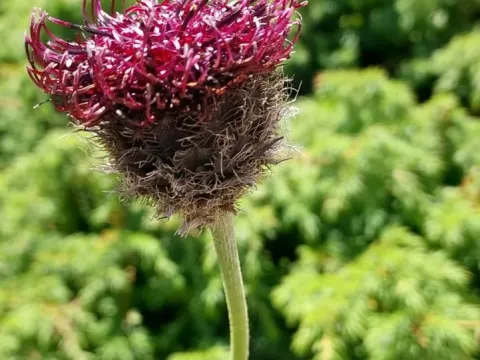
Centaurea kotschyana
Centaurea kotschyana
Centaurea kotschyana is a perennial herbaceous plant belonging to the Asteraceae family. In agricultural practices, seeds are typically sown in early spring once the soil temperature consistently reaches 10–12 degrees Celsius.
What the section contains
Centaurea kotschyana
For optimal results, seeds should be sown at a shallow depth of 1.5–2 cm to ensure high germination rates and uniform emergence. Deeper sowing can inhibit the development of young sprouts.
Row cultivation is recommended with a spacing of 30–45 cm between rows. This distance provides adequate space for plant growth and simplifies mechanical maintenance during the growing season.
The plant demonstrates high persistence and can grow in the same location for up to 5–7 years, making it an excellent candidate for stable long-term cultivation plots.
Proper field preparation is crucial, as the seedlings are initially sensitive to weed competition. Ensuring a clean seedbed significantly improves the establishment and vigor of the crop.
This species thrives in well-illuminated areas with full sun exposure. Lack of light can lead to spindly growth and reduced flowering, affecting both aesthetic and commercial quality.
Centaurea kotschyana prefers well-drained, moderately fertile soils ranging from sandy loam to loam. It is highly sensitive to waterlogging, which can cause root decay and plant mortality.
The plant is known for its remarkable drought tolerance, thriving in regions where water availability might be a limiting factor for other agricultural crops.
It performs best in neutral to slightly alkaline soil conditions. If the soil is too acidic, liming is recommended to optimize nutrient uptake and support overall plant health.
Climate adaptability is one of the plant's strengths, as it can withstand significant temperature fluctuations and is fully hardy in most temperate climate zones without specialized protection.
The yield of biomass is dependent on the management intensity and soil quality. Under favorable conditions, the plant produces high-quality herbal material valued for various biochemical properties.
In ornamental or landscape applications, productivity is measured by the number of inflorescences per plant. A mature, well-nourished specimen can produce dozens of flower heads per season.
Seed production is consistent, and harvesting is usually performed by cutting the heads once the seeds mature. This allows for both personal use and the propagation of new plots.
Optimizing mineral fertilization, particularly with phosphorus and potassium during the budding stage, significantly enhances the final biomass harvest and ensures strong flower development.
Yield management requires careful monitoring of plant density to prevent overcrowding, which can lower the individual plant output while increasing the risk of disease spread.
Fungal diseases are the primary threat to the crop, especially in humid conditions. Powdery mildew and various types of root rot are the most common pathogens affecting the plant's health.
Effective management includes maintaining optimal planting density and ensuring good air circulation around the plants to prevent the accumulation of excess humidity.
Common pests include aphids and spider mites, which can cause significant damage by feeding on foliage and buds. Infestations often lead to stunted growth and reduced flower quality.
Pest control should prioritize integrated approaches, such as the use of biological control agents or targeted, low-toxicity insecticides applied during the early stages of infestation.
Preventive maintenance, such as removing debris and infected plant parts, is vital for maintaining a healthy field and minimizing the need for intensive chemical applications.
The harvesting of inflorescences for medicinal purposes should occur during peak flowering. Harvesting at this stage ensures the highest concentration of essential bioactive compounds.
Collected plant material must be dried promptly in shaded, well-ventilated areas or specialized drying chambers at temperatures not exceeding 45 degrees Celsius to preserve quality.
Seed harvesting should be performed with precision; the heads should be collected before they fully dry and shatter, preventing significant yield loss during the collection process.
For maintenance of the crop, spent flower heads should be removed to encourage further growth and potentially a second wave of flowering later in the season.
Proper storage is key to quality maintenance. Dried products should be kept in airtight, light-proof containers in a cool, dry place to extend shelf life and potency.