
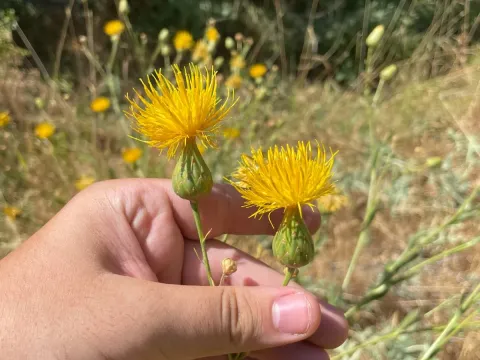
Centaurea behen
Centaurea behen
Centaurea behen is a notable species within the Asteraceae family. This perennial herb requires specific conditions to establish a successful population from seed.
What the section contains
Centaurea behen
Sowing can be performed either in late autumn for winter stratification or in early spring once the threat of severe frost has passed and soil temperatures have risen.
Seeds should be planted at a shallow depth of approximately 1–2 cm, as deep burial can impede germination. Proper soil moisture must be maintained throughout the establishment phase.
Row spacing should be maintained between 45 and 60 cm to allow for efficient weed management and potential mechanical cultivation during the early growth stages.
Germination typically occurs within two to three weeks under favorable soil moisture and temperature conditions, requiring careful monitoring of the seedbed.
Centaurea behen thrives in open, sunny environments. The plant is highly sensitive to shade, which significantly reduces the quality and quantity of the root yield.
This crop is drought-tolerant, making it suitable for regions with limited rainfall. Its natural range includes mountainous areas where it has adapted to harsh environmental stressors.
Well-drained soils, such as sandy or rocky loam, are essential for successful cultivation. The species cannot survive in heavy, waterlogged soils that promote root decay.
The optimal pH range for this crop is neutral to slightly alkaline. Growers should ensure that the soil structure provides adequate aeration to support the taproot's development.
Regular maintenance, including shallow inter-row cultivation, helps to improve soil porosity and prevents the development of crusts after rainfall or irrigation.
The primary economic focus of Centaurea behen production is its root system, which is harvested for various traditional and pharmaceutical applications.
The highest biomass accumulation in the roots is typically observed after the second year of growth, necessitating careful planning for harvest cycles.
Under managed field conditions, the expected yield can vary significantly based on site-specific factors such as fertility and water availability throughout the growing season.
Yield stability is maintained by selecting optimal planting densities, which prevents resource competition between plants and ensures consistent root size.
Processing efficiency depends on the quality of the harvested roots; thus, proper washing and post-harvest handling are essential to maintain the product's integrity.
The primary threats to Centaurea behen crops are fungal pathogens, specifically those causing root rot, which are triggered by poor field drainage and excessive humidity.
Pest infestations, including aphids and certain coleopterans, may damage foliage and weaken the plant's overall vigor, particularly during the flowering stage.
Preventive measures include crop rotation and ensuring that fields are free from stagnant water, which significantly mitigates the risk of soil-borne disease development.
Monitoring for foliar diseases such as powdery mildew is recommended during warmer, humid periods to prevent significant loss of photosynthetic capacity.
Integrated pest management strategies are advised, focusing on physical and cultural practices to maintain crop health without over-reliance on chemical inputs.
Harvesting usually takes place in the autumn, once the plant has entered its dormant phase and the energy reserves are concentrated within the roots.
Mechanical harvesters or deep-plough blades are used to extract the taproots, ensuring that the roots remain intact during the digging process.
After extraction, the roots are immediately cleaned of soil and debris, followed by the removal of smaller lateral roots to improve the quality of the primary harvest.
Drying must be conducted in controlled conditions, ideally with good airflow or in drying facilities at moderate temperatures to preserve the chemical compounds.
Once dried, the product should be stored in cool, dark, and dry conditions to prevent spoilage and maintain its medicinal and economic value over time.