
Boissier's safflower
Carthamus boissieri
Description
Sowing dates
The sowing window for Boissier's safflower is early spring, once the soil temperature reaches approximately 8–10 degrees Celsius. Early planting is crucial for the crop to utilize residual winter soil moisture effectively.
Seeds should be sown in rows with a spacing of about 45–60 centimeters, providing enough area for the plant to form a robust leaf rosette. The planting depth typically ranges from 3 to 5 centimeters, depending on the soil texture.
Maintaining the correct plant density is a key management aspect, as overcrowding leads to competition and decreased individual plant yield. An ideal stand density is usually around 20–30 plants per square meter for optimal harvest.
Pre-sowing tillage is highly recommended to eliminate early weeds and level the field surface. Proper soil preparation significantly improves the efficiency of subsequent field maintenance and streamlines the mechanical harvesting process.
Seedlings emerge uniformly if there is sufficient moisture in the topsoil layer. During the initial growth phase, the crop develops slowly, which necessitates proactive weed control between the rows to prevent nutrient and water competition.
Growing requirements
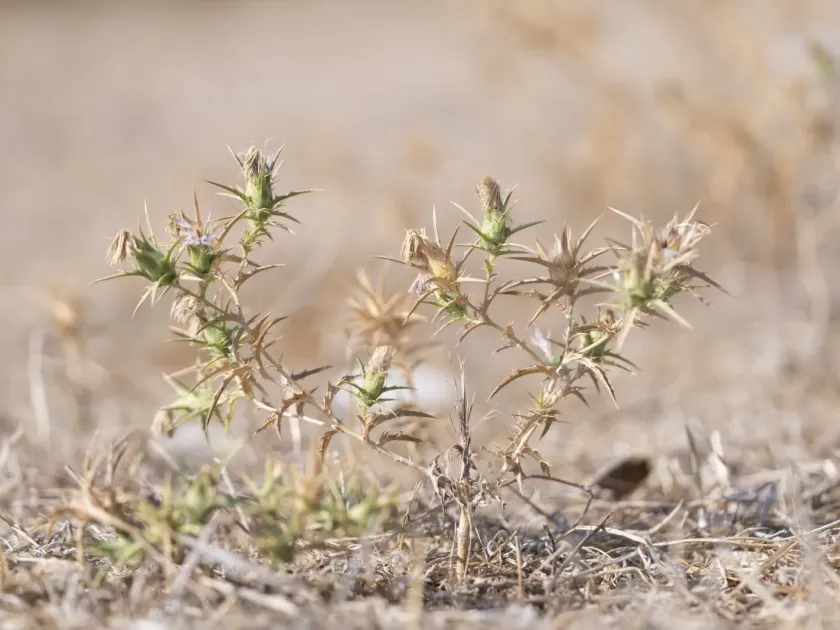
Boissier's safflower (Carthamus boissieri) is a rare herbaceous plant species belonging to the genus Carthamus in the Asteraceae family. Unlike the widely cultivated safflower, this species is endemic and possesses unique adaptive traits suited to specific environments.
The plant originates from the Mediterranean region, primarily found in Turkey and the surrounding Aegean islands. It is highly adapted to semi-arid climates and thrives in rocky, nutrient-poor soil types that are often unsuitable for conventional cereal crops.
This culture has high light requirements: for optimal development, Boissier's safflower needs full solar exposure throughout the day. Excessive shading significantly reduces flowering intensity and hinders the accumulation of valuable secondary metabolites.
The plant exhibits exceptional drought tolerance due to its deep taproot system, which allows it to access moisture in deeper soil horizons. The ideal temperature range for its vegetation is between +20 and +30 degrees Celsius, and it handles significant daily temperature fluctuations well.
It prefers well-drained sandy or loamy soils with a neutral to slightly alkaline pH. Waterlogging in the root zone is detrimental to this species, as it quickly triggers root rot and compromises the overall health of the crop.
Main diseases and pests
Major threats to this crop are primarily fungal diseases triggered by excessive soil or air moisture. Rust disease is one of the most significant risks, which attacks leaves and stems, causing premature wilting and reduced plant vigor.
Fusarium wilt, caused by soil-borne pathogens, can also pose a serious risk to the crop. To prevent this, strict adherence to a crop rotation cycle is necessary, ensuring the field is not replanted with safflower for at least 4–5 years.
Regarding pests, the safflower fly is particularly damaging, as its larvae feed on the developing seeds within the flower heads. Regular field monitoring during the budding stage allows farmers to identify infestations early and apply necessary protection measures.
Aphids can act as vectors for various viral diseases, leading to leaf deformation and stunted growth. Preventive insecticide applications early in the season are effective in controlling populations of harmful insects and preserving the harvest.
Weeds present the most significant competition during the early vegetative stage, especially in nutrient-poor environments. Mechanical interventions like harrowing or row cultivation remain the standard practices for weed management in sustainable and organic farming systems.