
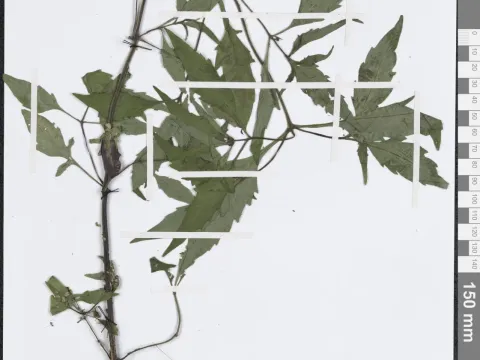
Swamp beggar-ticks
Bidens connata
Swamp beggar-ticks (Bidens connata) is an annual herb belonging to the Asteraceae family. Germination typically begins in early spring, once soil temperatures exceed 10 degrees Celsius, favoring moist environments.
What the section contains
Swamp beggar-ticks
The seeds are highly adaptable, capable of germinating from both the soil surface and shallow depths. In agricultural fields, seeds are often introduced via irrigation water or contaminated machinery.
Seedlings emerge predominantly during April and May. Rapid root system development allows the plant to quickly establish a competitive edge over surrounding vegetation in favorable conditions.
Flowering commences in late summer and extends until the first hard frosts of autumn. This long reproductive window allows the plant to produce a vast number of achenes, ensuring high invasive potential.
Effective management requires mechanical cultivation during the seedling stage. Timely intervention before the plant reaches the flowering phase is critical to stopping the life cycle and seed bank accumulation.
As its common name suggests, the swamp beggar-ticks is highly hydrophilic. It thrives in wet soils, frequently colonizing stream banks, irrigation ditches, and waterlogged fields.
The species prefers nutrient-rich, organic, and moist soil types. While it can survive in various soil textures, it is rarely found in dry, arid landscapes where moisture availability is limited.
Light exposure is a significant factor for growth. The plant thrives in full sun but can adapt to partial shading, provided that the soil moisture remains high throughout the growing season.
Regarding soil acidity, the species favors near-neutral or slightly acidic conditions. It is a common indicator of poor drainage in agricultural landscapes, often signaling the need for soil improvement.
Agricultural drainage is the most effective way to modify the environment to be less favorable for Bidens connata. By managing water levels, farmers can significantly reduce the pressure of this weed.
While relatively robust, swamp beggar-ticks can be susceptible to powdery mildew infections, especially in dense populations or areas with poor air circulation during humid weather.
Common insect pests include aphids and plant bugs, which feed on the sap of the stems and leaves. Such damage is generally cosmetic and rarely kills the plant but may reduce its overall vigor.
Integrated weed management is necessary to control this species in crop systems. This involves both chemical treatments using selective herbicides and mechanical control to manage population density.
Sanitation practices are essential, including the cleaning of tillage equipment between fields. This prevents the transfer of seeds into cleaner, well-drained areas where the weed would otherwise be manageable.
Crop rotation serves as a primary defense. By alternating competitive, dense-canopy crops with different tillage regimes, the life cycle of Bidens connata is frequently interrupted, keeping population levels low.