
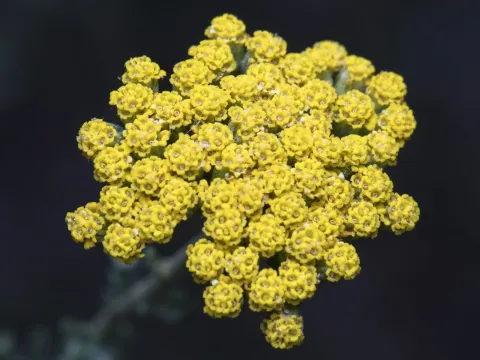
Sweet Ageratum Yarrow
Achillea ageratum
Achillea ageratum is typically propagated by seeds, which can be sown in spring once the threat of frost has passed. Seeds are small and require minimal soil coverage to ensure adequate light exposure for germination.
What the section contains
Sweet Ageratum Yarrow
For container starting, seeds should be placed in a sterile growing medium in late winter. Maintaining a steady temperature around 20 degrees Celsius will promote uniform and healthy sprout emergence.
Transplanting seedlings to their final outdoor location should be done carefully to protect the sensitive root system. Proper spacing, usually about 30 cm apart, is essential for healthy plant development.
The soil should be prepared by removing all perennial weeds, as the young seedlings are vulnerable to competition during their early growth stages. Incorporating a light dose of compost can improve the initial establishment.
Direct seeding in the garden requires a firm, level seedbed. After sowing, the soil should be lightly raked and kept consistently moist until the seedlings are strong enough to withstand drier conditions.
This species thrives in full sun exposure, which is critical for maximizing both its growth rate and the production of essential oils. Avoid planting in shaded areas, as this will lead to spindly stems.
Achillea ageratum prefers well-drained, sandy or loamy soils. It is highly tolerant of drought and poor nutrient conditions, making it a low-maintenance choice for many garden environments.
The ideal soil pH is neutral to slightly alkaline. Acidic conditions can stunt growth and should be corrected with agricultural lime before planting if necessary.
Proper water management is key, as the plant is extremely susceptible to root rot in waterlogged conditions. Once established, it requires very little additional irrigation even in hot weather.
- Requires full, direct sunlight.
- Thrives in lean, well-drained soil.
- Highly drought-tolerant once established.
- Minimal fertilizer requirements.
Yields of the aerial parts of Achillea ageratum depend on the plant's age and the timing of the harvest. Peak production is usually achieved in the second and third years of growth.
Regular maintenance, such as deadheading spent blooms, can stimulate secondary growth, effectively increasing the total amount of harvestable biomass during a single growing season.
Harvesting should be timed to coincide with the full bloom stage. At this point, the plant's essential oil concentration and secondary metabolites are at their highest levels.
Industrial harvesting methods can be used on larger plantations, ensuring that only the stems and flower heads are collected while leaving the woody base intact for regrowth.
Quality control during the harvest process is vital to maintain the integrity of the plant material, ensuring it is free from debris, dust, and other contaminants that could lower market value.
The most common threat is fungal rot, specifically root rot caused by poor soil drainage. Ensuring that the soil is light and airy is the best preventative measure against this issue.
Pests like aphids and spider mites can occasionally affect the plant in hot, dry summers. These pests are usually controlled with mild insecticidal soaps or biological control agents.
Powdery mildew may occur if air circulation is poor, particularly in humid regions. Pruning plants to provide better airflow significantly reduces the risk of such fungal infections.
Planting in a diverse landscape helps to discourage pest infestations, as natural predators are more likely to be present in gardens that are not strictly monocultures.
Monitoring the plants for early signs of yellowing or drooping foliage allows for swift action, preventing minor health issues from becoming major threats to the plant's survival.
Harvesting should always be done on a dry day to prevent mold growth during the drying process. The upper portions of the stems are cut with sharp, clean tools.
Immediately move the harvested material to a shaded, well-ventilated drying area. Exposure to direct sun will cause the volatile aromatic oils to evaporate, degrading the quality of the herb.
The drying process should be gradual. Using racks that allow for air circulation on all sides of the plant material will result in a more uniform and higher-quality final product.
Once fully dried, the material should be checked for brittleness, which indicates that it is ready for storage. Any remaining stems that appear damp or discolored must be removed.
Store the dried Achillea ageratum in airtight, light-proof containers. This ensures that the aromatic properties are preserved for as long as possible before the herb is utilized.