
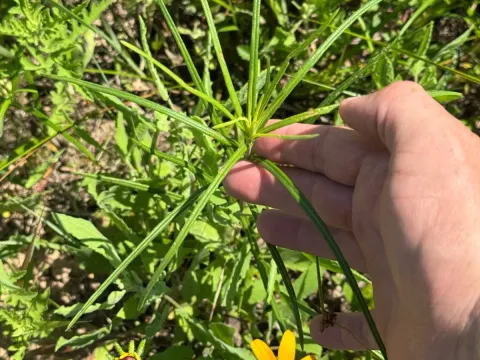
Swamp sunflower
Helianthus angustifolius
The swamp sunflower (Helianthus angustifolius) is a perennial member of the Asteraceae family. Native to the eastern and central United States, it thrives in environments that are typically moist, such as wet meadows, marshes, and ditches.
What the section contains
Swamp sunflower
This species is distinct for its narrow, willow-like leaves and late-season bloom. The plant typically grows to a height of 5 to 7 feet, producing numerous bright yellow flower heads that attract various pollinators, especially bees and butterflies.
Regarding climate and soil, this plant demands full sun exposure to flourish. While it is known for its tolerance to wet soils, it also performs well in average garden soil provided that organic matter is present to maintain fertility.
The plant demonstrates good adaptability to different soil pH levels, although slightly acidic to neutral soils are ideal. It is considered a hardy perennial that can withstand the cooler temperatures of early autumn without damage.
Due to its height and late blooming cycle, it is frequently used in native plant gardens, rain gardens, and as a structural element in the back of mixed flower borders.
Powdery mildew is the most common disease for Helianthus angustifolius, particularly in areas with poor airflow and high humidity. It manifests as a white, dusty layer on the surface of the leaves.
Rust disease can also affect the foliage, appearing as small, orange or brown pustules. Infected leaves should be removed and destroyed to prevent the spores from overwintering in the soil.
Insects like aphids and leafhoppers can cause damage by feeding on the sap of tender leaves and developing flower buds. Regular monitoring during the growth phase is essential for early intervention.
Stalk borers can tunnel into the stems of the plant, causing them to weaken and potentially collapse. This is more common in plants growing in or near overgrown, grassy areas.
Maintaining proper spacing between plants is the most effective cultural method to reduce humidity and discourage the development of fungal infections throughout the growing season.