
Asaemia axillaris
Asaemia axillaris
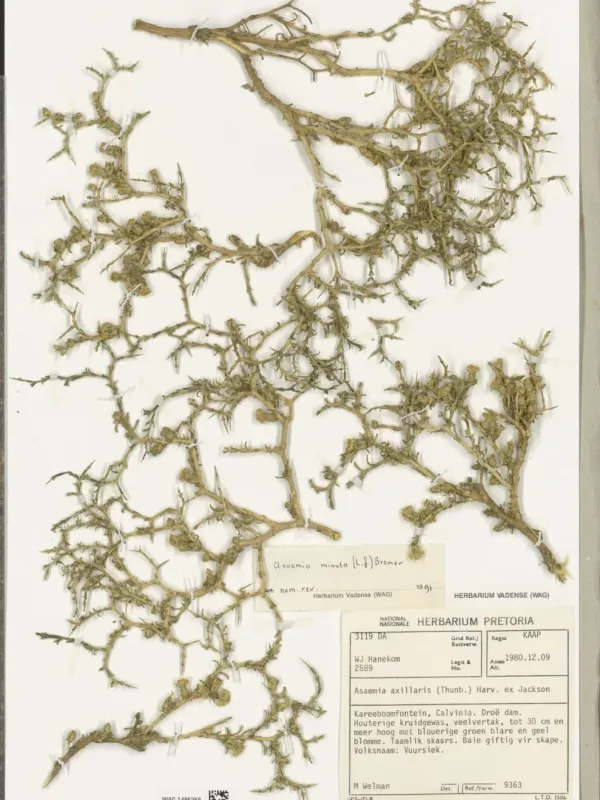
Description
Growing requirements
Asaemia axillaris is a resilient shrub belonging to the Asteraceae family, native to the arid regions of Southern Africa. Its morphological structure is specifically adapted to survive in environments where water availability is highly inconsistent and seasonal rainfall is minimal.
The plant thrives in well-drained, sandy, or rocky soils that prevent root saturation. Due to its evolutionary path in desert landscapes, it has developed a robust taproot system that facilitates efficient water uptake from deep underground water tables during dry spells.
In terms of climatic requirements, Asaemia axillaris demands high levels of solar irradiance to maintain its metabolic functions. It is highly resistant to heat stress, making it an ideal subject for xeriscaping or research into drought-tolerant vegetation for arid agricultural zones.
Agricultural management should focus on mimicking its natural habitat conditions, prioritizing excellent drainage and low-nutrient substrates. Excessive fertilization is generally discouraged as it may disrupt the plant’s natural hardening processes, which are essential for its long-term survival.
Air circulation is another critical factor in its successful maintenance, as high humidity and stagnant air can trigger fungal diseases on the foliage. Growers should ensure that the spacing between plants is sufficient to allow for rapid evaporation of dew or precipitation from the surface of the shrubs.