
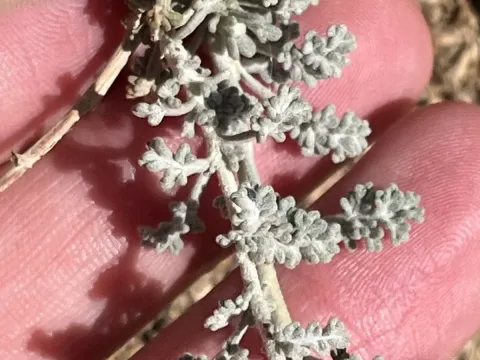
Artemisia sieberi
Artemisia sieberi
Artemisia sieberi is a desert-adapted plant that requires specific sowing techniques aligned with its natural life cycle. Late autumn or early spring is the optimal time for seeding, ensuring the seeds take advantage of natural soil moisture cycles.
What the section contains
Artemisia sieberi
The seeds of this species are tiny and sensitive to sowing depth. A shallow depth of 0.5 to 1 cm is crucial to allow the delicate seedlings to emerge successfully before the topsoil dries out completely.
For large-scale cultivation, mixing seeds with inert carriers ensures an even distribution across the field. It is important to note that the plant focuses its energy on root development during the first year, resulting in slow initial top growth.
Spring sowing requires careful monitoring, as moisture loss in the topsoil can be detrimental to emerging plants. In contrast, late autumn sowing allows for natural stratification, which often results in more vigorous and uniform germination in the following season.
Target planting density typically ranges from 40,000 to 60,000 plants per hectare. This density provides sufficient spacing to allow each plant to reach its full potential for essential oil production while suppressing weed competition.
Belonging to the Asteraceae family, Artemisia sieberi is a xerophyte designed to survive in extremely arid conditions. It is an ideal candidate for cultivation in semi-desert and desert environments where conventional crops fail.
The plant is not demanding regarding soil fertility, but it thrives in light sandy or rocky soils with excellent drainage. Waterlogging is highly detrimental, as the root system is prone to decay if kept in wet conditions for extended periods.
Artemisia sieberi is highly salt-tolerant, making it an excellent choice for the rehabilitation of degraded or saline lands. High solar radiation levels are essential for the metabolic processes that lead to the synthesis of essential oils.
The optimal temperature for growth ranges from +20°C to +35°C. The plant exhibits high resilience to extreme diurnal temperature variations, which are characteristic of its native arid habitat.
Once established, the crop requires very little maintenance. Its competitive nature allows it to effectively choke out weeds, minimizing the need for manual or chemical weed control in mature stands.
The biomass yield of Artemisia sieberi is heavily influenced by the amount of rainfall received during the early spring growth phase. On average, farmers can expect a dry yield of 2 to 4 tons per hectare under proper management.
The primary value of the crop lies in its essential oil content, which can reach 1.5% in dried flowers and leaves. These oils contain unique bioactive compounds, such as artemisin derivatives, which are highly valued in industrial applications.
Plantations remain productive for approximately 3 to 5 years. After this period, the plants naturally begin to decline, and the field should be rotated or replanted to maintain high yields and oil quality.
Targeted micronutrient application during the rosette stage can enhance oil concentration. However, excessive nitrogen fertilization should be avoided, as it can negatively alter the secondary metabolite profile of the plant.
Harvesting is largely mechanized, using specialized cutters to harvest the upper portions of the shoots. This efficiency contributes significantly to the economic viability of growing Artemisia sieberi as a commercial crop.
Due to its high content of phytoncides, Artemisia sieberi is naturally resistant to most common agricultural diseases. The most significant risk factor is root rot, which occurs only if the soil remains excessively damp for long durations.
Pests are generally not a concern because the bitter aromatic compounds in the plant act as a natural deterrent. Occasional infestations of foliage-eating caterpillars may occur, but they rarely cause significant economic damage.
Powdery mildew can become an issue if plants are grown in areas with high humidity and poor air circulation. Proper row spacing is a fundamental cultural practice to prevent such issues before they start.
In the wild, overgrazing is the primary threat to Artemisia populations. On agricultural land, it is necessary to protect the crop from livestock and unauthorized machinery to ensure the long-term health of the plantation.
Effective protection strategies include:
- maintaining proper spatial distancing;
- monitoring field health regularly;
- ensuring adequate soil drainage;
- using high-quality, pest-free seeds for initial sowing.
Timing the harvest is critical to maintaining high oil quality. The harvest should coincide with the early to full flowering stage, as this is when the secondary metabolites are most concentrated in the reproductive organs.
Cutter bars should be adjusted to leave 10–15 cm of the lower stem, which prevents damage to the crown and ensures the plant's ability to regenerate in subsequent years without the need for replanting.
Post-harvest handling requires rapid drying to prevent fermentation or oil degradation. Shade-drying with active ventilation is the best practice to preserve the delicate aroma and medicinal properties of the foliage.
Once dried, the raw material is processed to remove coarse stems, resulting in a cleaner, more valuable product. Proper processing increases the overall concentration of active ingredients in the bulk commodity.
Stored material must be kept in cool, dark, and dry conditions to protect the essential oils from oxidation. Sealed storage containers are recommended to ensure the product remains viable for export or secondary processing for up to two years.