
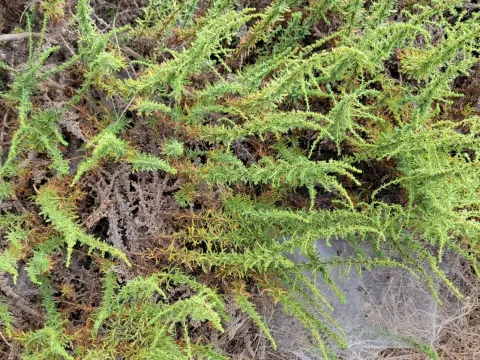
Artemisia monosperma
Artemisia monosperma
Artemisia monosperma, commonly known as a type of desert wormwood, is a perennial semi-shrub belonging to the Asteraceae family. It is naturally adapted to harsh desert environments and sandy soils.
What the section contains
Artemisia monosperma
This plant is highly valued for its exceptional drought tolerance. It features a deep, well-developed root system that effectively secures loose sandy soil, making it a vital plant for anti-erosion measures.
The ideal habitat for Artemisia monosperma involves well-drained sandy or loamy soils. It cannot tolerate waterlogging, which often leads to root rot and immediate decline in plant health.
As a light-loving species, it requires full sun exposure throughout the day. Insufficient light levels inhibit its growth and result in the thinning of the vegetative mass, which is critical for its soil-binding function.
The climate requirements include high temperatures and low humidity, typical of the Mediterranean and Middle Eastern regions. It thrives in conditions that would cause most traditional agricultural crops to fail.
Propagation is primarily conducted via seeds. Seeds should be sown in early spring, once the risk of severe frost has passed and the soil begins to warm, promoting rapid germination.
The sowing depth is crucial for small seeds like those of Artemisia monosperma. It should not exceed 1–2 cm to ensure that the emerging seedling can reach the surface without depleting its energy reserves.
In large-scale reclamation projects, seeds are often drilled in rows 50–70 cm apart. This spacing allows for adequate airflow and provides room for the root systems to expand extensively.
Seedlings develop relatively slowly in the first few months. During this establishment phase, weed control is essential to ensure that the young plants have sufficient access to moisture and limited nutrients.
Once the plants have reached a height of 10–15 cm, their growth rate accelerates, and they become significantly more robust, requiring minimal intervention as they begin to dominate the site.
The primary economic and environmental use of Artemisia monosperma is in phytoremediation and the stabilization of moving sand dunes to prevent desertification and protect infrastructure.
In arid regions, it serves as an emergency forage for livestock such as camels and sheep, especially during winter months when other vegetation sources are extremely scarce or dormant.
Seed harvesting is conducted in late autumn once the flower heads have dried and turned brown. Mechanical harvesters are preferred for larger areas, while manual collection is used for site-specific projects.
The collected material is threshed and winnowed to separate the viable seeds from the chaff. Clean, high-quality seeds are essential for achieving uniform coverage in future planting campaigns.
Storage of the seed stock should be in a cool, dry, and well-ventilated location. Proper storage conditions ensure high viability for 2–3 years, which is vital for long-term conservation planning.
The main disease risk for Artemisia monosperma is powdery mildew, which thrives if plants are grown in high-humidity conditions or areas with poor air circulation.
Pests such as aphids and various species of weevils can cause significant damage to the new growth. Early identification of pest populations is key to preventing severe infestations.
Integrated pest management (IPM) is the recommended approach for dealing with threats. This includes monitoring populations and employing biological controls whenever possible to avoid harming the ecosystem.
Cultural practices, such as maintaining correct planting density, are the most effective preventative measure against the spread of diseases and the attraction of pests to the plantation site.
Overall, maintaining the plants in their optimal environmental conditions—namely full sun and well-drained soil—significantly reduces the risk of pest and disease outbreaks.