
Black sagebrush
Artemisia nova
Black sagebrush (Artemisia nova) is a distinctive perennial shrub belonging to the Asteraceae family. It is widely recognized for its ability to thrive in extremely harsh and nutrient-poor environments where other vegetation fails to survive.
What the section contains
Black sagebrush
Originating from the mountainous regions of the Western United States, this species is typically found on rocky slopes and calcareous soils. Its natural habitat is characterized by arid conditions, making it a highly resilient botanical specimen.
The plant requires full sun exposure and excellent soil drainage. It is highly sensitive to waterlogged conditions, which can quickly lead to root rot. Soils with a slightly alkaline pH are ideal for its physiological development and overall health.
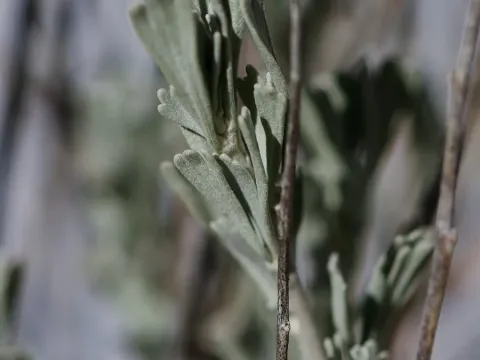
Botanically, it is identified by its small, dark green to silvery-gray leaves and its compact, aromatic growth habit. It grows significantly slower than related sagebrush species, reflecting its adaptation to severe environmental stressors.
Cultivation practices involve minimal fertilization and strictly regulated irrigation. Once established, the plant exhibits remarkable drought tolerance, requiring little to no supplemental water even during extended dry spells.
The primary agricultural and environmental use of Artemisia nova involves land reclamation and soil stabilization. Its deep, fibrous root system anchors the soil, preventing degradation in arid regions subject to high winds.
In range management, it serves as an important winter forage source for various wildlife and small ruminants. It provides essential nutrients during periods when other forage sources are unavailable or buried under snow.
Harvesting for medicinal or aromatic applications is typically conducted during the flowering stage. Essential oils derived from the foliage are studied for their potential antimicrobial and preservative properties in organic agriculture.
Sustainable harvesting techniques require rotational patterns to ensure the longevity of the shrubs. Care must be taken not to over-harvest, as recovery rates for this slow-growing species are significantly lower compared to herbaceous crops.
Post-harvest processing involves air-drying the harvested material in shaded, well-ventilated areas to prevent the degradation of volatile organic compounds. Properly processed material retains its efficacy for extended periods.